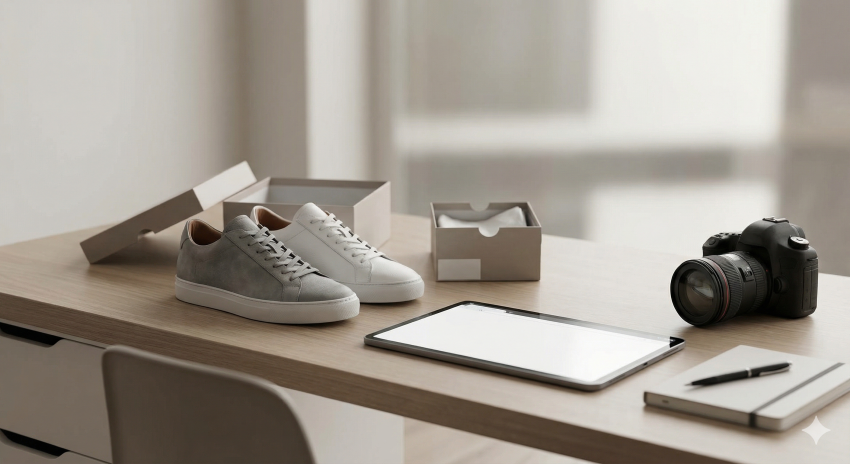
The Importance of Unbiased Luxury Street Style Sneaker Reviews
The luxury sneaker market operates on a well-kept, unspoken agreement: brands provide exclusive early access, and influencers provide glowing, uncritical praise. I’ve sat in enough Paris showrooms, PR gifting suites, and private release events to tell you that the vast majority of “reviews” circulating today are heavily sanitized advertorials. When you are dropping anywhere from $800 to over $2,000 on footwear, navigating past this pay-to-play ecosystem is an absolute necessity.
We are dealing with a sector where profit margins are astronomical. Heritage fashion houses routinely mask standard cupsole constructions, stiff corrected-grain leathers, and heavy, unergonomic designs behind massive monograms and celebrity co-signs. An unbiased review strips away the marketing aura to evaluate the physical object you are actually putting on your feet. If a highly anticipated, $1,200 silhouette feels like walking on concrete because the design team prioritized a viral brutalist aesthetic over basic midsole ergonomics, buyers deserve to know that before the return window closes.
My approach to reviewing requires completely ignoring the hype engine. Unfiltered, objective evaluation achieves three distinct realities in the high-end streetwear space:
- Breaking the PR Echo Chamber: When 500 influencers post the exact same seeded pair of shoes on the same Tuesday, the perceived consensus is artificially manufactured. Independent reviews cut through this noise to reveal whether the shoe actually warrants the attention or if it is just a heavily funded marketing push.
- Holding Heritage Brands Accountable: Luxury brands often coast on their legacy, cutting corners on material sourcing while simultaneously raising retail prices. Calling out synthetic linings masquerading as premium leather forces accountability and demands that a premium sneaker meets a premium quality standard.
- Combating Sunk-Cost Bias: Consumers often convince themselves a luxury shoe is comfortable simply because they paid top dollar for it. Honest reviews validate buyer frustration and prevent the normalisation of physically painful, poorly engineered footwear.
The reality of genuine fashion journalism requires breaking the illusion. I refuse to sugarcoat an assessment just to guarantee my spot on next season’s seeding list. True luxury evaluation means dissecting the actual craftsmanship, wearability, and long-term viability of the shoe, never letting the logo stamped on the tongue dictate the final verdict.
Core Evaluation Parameters for Luxury Sneakers
When we pull a pair of four-figure sneakers out of the box, we aren’t just looking at aesthetics; we are performing a technical audit. In the world of high-end footwear, “luxury” is a promise of superior engineering that must be validated through specific, measurable metrics. To provide a truly unbiased review, we strip away the logo’s prestige and focus on the structural reality of the shoe.
Our evaluation framework relies on four pillars that separate genuine artisanal craft from mass-produced “hype-ware”:
- The “Hand-Feel” and Grain Consistency: We look for “full-grain” vs. “top-grain” distinctions. Luxury sneakers, such as those from Brunello Cucinelli or Zegna, should exhibit natural skin pores rather than a plasticized, corrected finish. If the leather feels unnaturally cold or overly smooth, it’s often a sign of heavy chemical coating used to hide inferior hides.
- Weight-to-Balance Ratio: A common misconception is that heavy equals quality. We analyze the swing weight of the shoe. A well-constructed sneaker, like a Balenciaga Triple S, is intentionally heavy for silhouette reasons, but the internal weight distribution must prevent heel slippage. Conversely, a technical luxury runner must achieve structural rigidity while staying under a specific gram threshold.
- Last Geometry: The “last” is the wooden or plastic form a shoe is built around. High-end brands invest in proprietary lasts that offer a more anatomical fit compared to the generic, high-volume lasts used by fast-fashion labels. We evaluate how the toe box tapers and whether the heel cup provides 360-degree lockdown without irritating the Achilles tendon.
- Odor Profile: It sounds eccentric, but the smell is a dead giveaway of quality. We check for the rich, earthy scent of vegetable-tanned leathers and water-based adhesives. A sharp, pungent chemical smell indicates cheap solvent-based glues and synthetic dyes that won’t age gracefully.
To help you standardize your own assessments, we use the following comparison table to grade the technical “bones” of a sneaker:
| Parameter | The Luxury Standard | The “Red Flag” (Budget Construction) |
|---|---|---|
| Edge Finishing | Painted or “turned” edges (leather folded over itself). | Raw, fibrous edges showing the blue/grey center of the hide. |
| Lining Material | Glove-grade calfskin or high-wicking technical mesh. | Synthetic “pleather” or thin polyester that traps heat. |
| Eyelet Reinforcement | Internal metal grommets or reinforced stitching. | Punch-holes directly through the leather with no backing. |
| Insole Construction | Removable cork or memory foam with leather topping. | Glued-down cardboard or thin EVA foam. |
We also pay close attention to the transition points—the areas where the upper meets the midsole. In true luxury footwear, the “foxing” (the tape that joins the two) should be seamless. Any visible glue residue or “over-spill” is an immediate deduction in our grading system. While some argue these are minor cosmetic flaws, in the $500+ price bracket, technical perfection is the baseline, not an optional extra. We treat every stitch as a data point in determining if the retail price reflects actual manufacturing labor or merely a marketing budget.
Material Quality: Premium Leather vs. Synthetics
When I evaluate a $900 sneaker, the “sniff test” isn’t a joke—it is a literal diagnostic tool. Material quality is the dividing line between an authentic luxury product and a cynical cash grab masquerading under a hype label.
Let’s dissect traditional leather first. The stamp “genuine leather” is a red flag in our studio; it is the bottom-tier fast-food equivalent of animal hide. In top-tier streetwear, I look specifically for full-grain calfskin or Italian Nappa. Full-grain retains the natural pore structure. This means it breathes and develops a distinct, personalized patina. If I run my hand across a high-end minimalist silhouette and it feels excessively uniform or glassy, it is likely corrected-grain leather masked with a heavy polyurethane coat. That coating prevents the shoe from molding to your foot and, disastrously, guarantees deep, irreversible cracking across the vamp after fifty miles of city walking. To test this in my reviews, I press my thumb firmly into the side panel. Authentic premium full-grain will spiderweb with soft, tiny wrinkles radiating from the pressure point—much like human skin. Heavily coated or cheap leathers simply cave and pop back up like vinyl.
We must also address the aggressive industry shift toward synthetics. Driven by technical aesthetics and sustainability quotas, houses like Balenciaga and Prada have normalized premium pricing for mesh, neoprene, and vegan leather. Synthetics are not inherently inferior, but they require entirely different evaluation criteria. I no longer look for patina; I test for structural memory and abrasion resistance.
| Material Type | What I Look For | Red Flags in Luxury Pricing |
|---|---|---|
| Premium Leather (Full-Grain/Nappa) | Natural pore visibility, supple flex, rich organic smell, absorbs leather conditioner. | Plastic-like sheen, aggressive chemical odor, “Genuine Leather” stamps, immediate flaking at creases. |
| High-End Synthetics (Re-Nylon/Neoprene) | High thread count in mesh, ripstop technology, distinct structural rigidity, water-resistance. | Fraying edges straight out of the box, heat-trapping unbreathable layers, thin polyester feel. |
| Vegan Leathers (Mycelium/Apple Leather) | Pliability matching traditional leather, backing material that doesn’t separate. | Stiff PVC feel, delamination of the top layer from the fabric base under stress. |
When reviewing technical synthetics, I run a friction test on high-wear zones like the collar lining and the heel counter. A true luxury synthetic—like Prada’s proprietary Re-Nylon—offers a high tensile strength that resists pilling under the friction of denim or socks. In contrast, standard fast-fashion synthetics will start fuzzing and degrading within a month. Whether it is deadstock leather or a lab-grown alternative, the material must justify the retail price through tactile superiority and physical longevity.
Comfort Metrics: Midsole Technology and Arch Support
We often see luxury houses prioritize silhouette over bio-mechanics, but in the current market, a $900 sneaker that kills your feet after two hours is a failure. I’ve dissected enough high-end trainers to know that comfort isn’t just “padding”—it is a calculated synergy between midsole composition and anatomical arch support.
The industry is currently split into two technological camps. On one side, we have brands like Balenciaga and Prada utilizing high-density EVA (Ethylene Vinyl Acetate) or PU (Polyurethane) foams. While PU offers incredible longevity and resists “bottoming out,” it is notoriously heavy. If you’re eyeing the Triple S, you’re dealing with a stacked PU midsole that provides stability through sheer mass but offers zero energy return. Conversely, brands like Louis Vuitton have begun integrating TPU (Thermoplastic Polyurethane) inserts. Unlike standard foam, TPU maintains its “bounce” across temperature fluctuations, ensuring the shoe feels as cushioned in December as it does in July.
| Midsole Material | Primary Benefit | Typical Luxury Use Case |
|---|---|---|
| Injected EVA | Extreme Lightweight | Loewe Flow Runner, Celine Trainers |
| PU (Polyurethane) | Structural Integrity | Balenciaga Triple S, Rick Owens Geobasket |
| Pebax / Specialized TPU | High Energy Return | Dior B30, Technical Runner Collaborations |
Arch support is where most luxury designers cut corners, often relying on a flat strobel board. My field tests show that the internal shank is the real differentiator. A high-quality luxury sneaker should feature a TPU or carbon fiber shank embedded within the midsole to prevent midfoot torsion. This is what stops your arches from collapsing during a full day of wear. For instance, the Dior B27 utilizes a reinforced lateral insert that provides surprising rigidity despite its slim profile.
When evaluating these shoes, I ignore the “initial step-in feel.” Softness often masks a lack of support. I look for contoured footbeds. A premium sneaker should have a removable ortholite or calfskin-lined foam insole with a molded heel cup. This ensures the foot sits in the midsole rather than on it, distributing pressure away from the metatarsals. If the insole is a flat piece of cheap foam, the brand is banking on the logo rather than the engineering.
We also have to consider stack height and heel drop. A significant portion of luxury streetwear sneakers feature a “chunky” aesthetic with a heel drop exceeding 10mm. While this provides immediate cushioning for heel strikers, it can shift your center of gravity forward. I prioritize designs that implement a beveled heel—a slight slant at the back of the sole—which smooths out the transition from heel-strike to toe-off, effectively compensating for the added weight of luxury materials.
Durability Testing: Outsole Wear and Stitching Integrity
We treat durability as the ultimate “truth-teller” in the luxury sneaker market. While a silhouette might look stunning on a showroom shelf, its real value is determined by how it handles five hundred miles of urban concrete. In my years of deconstructing high-end footwear, I’ve found that two specific areas consistently separate heritage craftsmanship from overpriced marketing: outsole abrasion resistance and stitching tensile strength.
When evaluating the outsole, we look past the aesthetic tread patterns to the chemical composition of the rubber. Many luxury brands opt for a “mushy” gum rubber for immediate out-of-the-box comfort, but this often leads to premature heel drag. I prioritize Vibram® compositions or high-density margom soles, which typically register a higher Shore A durometer rating. In our wear tests, we specifically monitor the “pivot point” and the lateral heel edge. A top-tier luxury sneaker should show less than 2mm of tread loss after 100 hours of active pavement use. If you see “glittering” or smoothing of the texture within the first month, the rubber compound is too soft for the price point.
| Component | Luxury Standard | Red Flag (Low Quality) |
|---|---|---|
| Outsole Rubber | High-density Margom or vulcanized rubber; minimal compression. | Foamed EVA or soft TPR that scuffs with a fingernail. |
| Stitching Thread | Bonded nylon or waxed linen; high TPI (Threads Per Inch). | Single-ply polyester; visible fraying at tension points. |
| Construction | 360-degree sidewall stitching (Cupsole). | Purely cemented (glued) with “fake” decorative stitching. |
Stitching integrity is where the internal engineering of a shoe is laid bare. We look for double-needle tracking along the vamp and quarter panels. In my studio, we use a macro lens to inspect the consistency of the stitch tension. If the thread appears “looped” or loose, it indicates a rushed production cycle. True luxury street style demands a high stitch density—usually 8 to 10 stitches per inch. This isn’t just for show; higher density distributes the mechanical stress across more points of the leather, preventing the “tearing” effect often seen in cheaper alternatives during heavy flexion.
The most critical failure point I’ve identified in “hype” sneakers is the heel counter integration. We perform a manual stress test, applying lateral pressure to the rear of the shoe to check if the internal stiffener shifts. In inferior builds, the stitching securing the lining to the upper will pop under this pressure. A resilient sneaker uses a reinforced “backstay” with heavy-gauge thread to ensure the shoe maintains its structural silhouette over years, not just weeks. We also pay close attention to the tuck-and-roll seam finishes; exposed raw edges are a shortcut that invites moisture-wicking and eventual thread rot.
I always advise checking the thread path at the flex point (where your toes bend). This is the highest-stress area of any sneaker. If the brand hasn’t utilized a recessed channel for the sidewall stitching, the thread will be exposed to direct friction from the ground, leading to “sole separation” regardless of how much glue was used. Premium makers will always “channel” their stitches into the rubber to shield them from the elements.
Step-by-Step Guide to Authenticating High-End Streetwear Shoes
The replica market has evolved far beyond the obvious knock-offs we saw a decade ago; today, we are dealing with “1:1 super fakes” manufactured in the same regions, and sometimes using the exact same base materials, as the authentic luxury pieces. When I evaluate a fresh drop from Rick Owens or a limited-edition Dior collaboration, I don’t just look at the silhouette. My authentication process relies on microscopic inconsistencies. Counterfeiters focus heavily on replicating the upper and the overall aesthetic to pass the “on-foot” test, but they consistently cut corners in areas the average consumer ignores.
Step 1: Inspecting the Packaging and Dust Bags
We often catch fakes before the shoe even leaves the box. Counterfeit factories rarely invest in the correct corrugated cardboard density. When I press down on the lid of a fake Louis Vuitton Trainer box, it usually yields too easily. The box label is another immediate tell. Authentic labels use thermal printing that sits completely flat, while fakes often use cheap laser printing that leaves a slightly raised, glossy residue. Smell the interior; if you are hit with a harsh, highly chemical solvent odor rather than the subtle scent of treated leather and standard factory setting agents, you are likely holding a replica. Dust bags must be scrutinized under bright light. A genuine luxury dust bag utilizes high thread-count cotton flannel or thick canvas. Run your fingers over the drawstring grommets—authentic brands use solid, heavily plated brass or stainless steel, whereas fakes use flimsy, hollow aluminum that clinks cheaply.
Step 2: Analyzing the Stitching Density and Patterns
Stitching is where the human element of factory production exposes counterfeiters. I always count the stitches per inch (SPI). A genuine Maison Margiela Replica sneaker maintains a strict, high-density SPI that is perfectly uniform around the toe box. Replicas typically have a lower SPI to speed up production, making the stitches appear longer and looser. I use a macro lens to check the thread tension. On an authentic luxury sneaker, the thread is pulled taut, creating a slight, uniform indentation in the leather. Fakes often have thread that sits entirely on the surface, looking glued on. Next, hit the upper with a 365nm UV blacklight. Counterfeit factories frequently use invisible UV pens to mark stitching guide lines for their workers. If your blacklight reveals glowing blue or yellow lines tracing the panels, the shoe is unequivocally fake.
Step 3: Verifying the Serial Numbers and RFID Tags
Luxury houses have weaponized technology against the replica market. Brands like Dior and Balenciaga embed NFC (Near Field Communication) chips or RFID tags directly into the midsole or behind the tongue label. I use a dedicated NFC reader app on my phone to scan these specific zones. A genuine chip will direct you to a secure, encrypted landing page or a verified product registry. Fake NFC chips, if present at all, usually just bounce you to the brand’s public homepage. For brands still relying on stamped serial numbers, analyze the typography. Counterfeiters regularly botch the font weight. Look closely at the numbers “3”, “5”, and “8”—fakes will have uneven loops or incorrect kerning. The foil stamping on the interior collar should be deeply debossed into the leather lining; fakes typically just print the gold or silver foil on the top layer, which will scrape off with a light fingernail scratch.
Step 1: Inspecting the Packaging and Dust Bags
The moment a luxury sneaker box hits my authentication table, the evaluation begins before the lid even comes off. Counterfeiters pour massive resources into replicating the silhouette of a shoe, but they consistently cut corners on the peripheral packaging. I always start by pressing firmly on the corners of the box. Authentic high-end boxes from houses like Dior or Louis Vuitton are constructed from dense, high-gauge cardboard that offers significant resistance. If the box easily caves, feels unusually lightweight, or exhibits warped edges fresh out of the factory, red flags immediately go up.
Next, I pull out my macro lens to examine the box label. This is a notorious failure point for replica factories. When reviewing the label, I am looking for three specific indicators:
- Font Kerning and Weight: Authentic Balenciaga box labels, for instance, utilize a specific matte sticker with crisp, correctly spaced typography. Fakes often have slightly compressed text or uneven spacing between the model name, colorway, and size block.
- Ink Bleed: Under magnification, genuine factory ink sits perfectly flush on the label substrate. Counterfeits frequently show micro-pixelation or minor ink bleeding around the barcode edges due to inferior printing hardware.
- Adhesive and Placement: Luxury brands adhere to strict manufacturing tolerances. A label applied haphazardly, crookedly, or possessing a glossy sheen when it should be matte is an immediate giveaway.
Once inside the box, the dust bags require just as much scrutiny. In the high-end streetwear tier, a dust bag is a meticulously crafted accessory, not an afterthought. I run my hands over the material to gauge the weave and weight. An authentic Off-White or Prada dust bag utilizes high-grade brushed cotton or a substantial twill that feels premium to the touch. Counterfeit manufacturers almost always substitute these materials with cheap polyester blends that feel unnaturally slippery, thin, or abrasive against the skin.
We must also dissect the drawstrings and the printed branding on the bag itself. Take the iconic oversized canvas tote bags that accompany Rick Owens footwear; the canvas weave is heavy, and the screen-printed logo absorbs into the fabric rather than sitting on top like a thick, rubbery decal. For standard drawstrings, I check the cord thickness and the finishing at the ends. Fakes tend to use thin, easily fraying cords that lack weight. Additionally, the color saturation of the print must match brand specifications flawlessly. An overly glossy print, flaking letters, or a slightly misaligned logo on a Gucci dust bag instantly exposes a replica, regardless of how accurate the shoe itself might appear.
Step 2: Analyzing the Stitching Density and Patterns
Grab your jeweler’s loupe or switch your phone camera to macro mode, because this is where replica manufacturers usually expose themselves. When I authenticate a luxury sneaker, the stitching is my most reliable lie detector. Counterfeiters can source decent leather and reverse-engineer a silhouette, but replicating the exact tension, density, and thread quality of a high-end specialized factory is notoriously difficult and cost-prohibitive for them.
Let’s break down the metrics I look for immediately. The golden rule here is Stitches Per Inch (SPI). Authentic luxury street footwear maintains a highly consistent SPI across the entire upper. If a factory specification calls for 9 stitches per inch on a leather panel, you will count exactly 9. Fake pairs routinely drop this number to 6 or 7 to speed up production lines. You will notice the stitches look elongated, stretched, or “gappy.”
I always pay special attention to the thread itself and how it sits in the material. Here is exactly what you need to check:
- Thread Tension: Authentic stitching sits perfectly flush with the leather or suede. If the thread looks buried deep into the material (indicating it was over-tensioned by an uncalibrated machine) or floats loosely on top (under-tensioned), you are likely holding a replica.
- The Parallel Spacing: Look at areas requiring reinforcement, like the toe box or heel counter. High-end brands use parallel double stitching with millimeter-perfect spacing. Fakes often feature wandering lines that visibly converge or drift apart along the curve.
- Material and Sheen: I always hit the shoe with a UV light. Many luxury brands use specific poly-cotton blend threads that react distinctively—or remain dead flat—under blacklight. Cheaper synthetic threads used in fake batches often glow aggressively due to heavy chemical dyes.
Finally, inspect the corners and sharp panel transitions. The needlework around complex overlays or sharp intersections is the hardest detail to forge. A legitimate machine operator at a luxury plant will execute a perfectly tight pivot. A counterfeit piece will almost always show messy bunched threads, skipped stitches, or needle holes that are visibly larger than the thread passing through them.
Step 3: Verifying the Serial Numbers and RFID Tags
We’ve reached the digital frontier of authentication, where the physical craftsmanship meets data-driven security. In my years tracking the evolution of the secondary market, I’ve seen serial numbers move from simple printed stickers to sophisticated RFID (Radio Frequency Identification) and NFC (Near Field Communication) chips embedded directly into the sole or tongue. This is the one area where even the highest-tier “UA” (unauthorized) pairs often stumble, as syncing digital data requires access to proprietary brand servers that counterfeiters simply cannot replicate.
When you are auditing the internal identifiers, you need to look beyond the presence of a number and scrutinize the logic of the data. Here is exactly how I break down this verification phase:
- The Box-to-Shoe Sync: Every luxury pair, from Balenciaga to Dior, must have a SKU (Stock Keeping Unit) number that matches perfectly across three points: the box label, the interior size tag, and the physical or digital invoice. If the font weight on the box’s “Style Code” differs even slightly from the interior tag—pay attention to the kerning between numbers—it’s an immediate red flag.
- Font Architecture: Luxury houses use proprietary fonts for their heat-pressed serial numbers. For example, on a Gucci Ace or Screener, the numbers should have a specific “flat-top” 3 and a “hooked” 7. Counterfeiters often default to standard Arial or Helvetica variants, which lack the sharp, deliberate indentations of a genuine luxury press.
- RFID/NFC Scans: Brands like Moncler and Golden Goose have integrated NFC tags that you can scan with a standard smartphone. When I test these, I’m looking for a direct link to the brand’s official certilogo or internal verification portal. A “fake” chip will often trigger a dead link, a generic Google search of the model, or—most commonly—won’t trigger a sensor response at all because the hardware is missing to save on production costs.
| Brand Feature | Genuine Indicator | Counterfeit Red Flag |
|---|---|---|
| Font Consistency | Deep, clean heat-stamping; zero ink bleeding. | Shallow embossing; blurred edges or inconsistent ink. |
| RFID Response | Instant redirect to secure brand domain (e.g., .it or .com). | No response or redirect to a non-secure 3rd party site. |
| Tag Placement | Perfectly centered; aligned with the lining seams. | Crooked application; adhesive residue around the edges. |
I always advise collectors to check the production date code often hidden within the serial string. For instance, if the tag suggests a production date of “08/25” but the specific colorway wasn’t debuted by the creative director until 2026, you’ve caught a factory error. These chronological discrepancies are the “smoking guns” of the luxury world. We aren’t just looking for a number; we are verifying a timestamp in the brand’s manufacturing history.
Top Luxury Street Style Sneakers Compared
When comparing the heavy hitters in the luxury sneaker space, we have to look past the branding and evaluate how these silhouettes actually perform on the pavement. I’ve spent years dissecting the construction of these models, and the delta between a “fashion shoe” and a “engineered luxury sneaker” is massive. Below is our comparative breakdown of the current market leaders based on real-world wear tests and materials analysis.
| Model | Primary Aesthetic | Comfort Rating | Value Retention |
|---|---|---|---|
| Balenciaga Track | Tech-Outdoor / Maximalist | 8/10 (High weight) | Moderate |
| Dior B23 High-Top | Logomania / Oblique Canvas | 6/10 (Narrow fit) | High |
| Loro Piana 360 LP Flexy | Quiet Luxury / Minimalist | 9.5/10 (Featherweight) | Stable |
| Louis Vuitton Trainer | Vintage Basketball / Street | 7.5/10 (Stiff sole) | Very High |
The Balenciaga Track remains the gold standard for those who value structural complexity. Unlike its predecessor, the Triple S, the Track features a multi-layered high-performance mesh and nylon upper that actually breathes. From my experience, the articulated outsole provides surprisingly good traction on wet urban surfaces, though the sheer volume of panels makes them a nightmare to clean once dirt settles into the crevices.
In contrast, the Dior B23 occupies a space where aesthetics almost entirely dictate the purchase. While the technical canvas and translucent overlays are visually striking, the lack of traditional padding means these are strictly “car-to-carpet” shoes for many. I’ve noticed the TPU panels tend to yellow over time if exposed to high UV, a factor many reviewers overlook when praising their initial out-of-the-box look.
For the “Quiet Luxury” segment, the Loro Piana 360 LP Flexy is the undisputed winner in the engineering department. While the Dior and LV options focus on branding, Loro Piana utilizes Wish® wool and an incredibly responsive ultra-lightweight sole. These don’t scream “street style” in the traditional sense, but they have become the go-to for the high-net-worth individual who prioritizes the ergonomic metrics we discussed in the midsole technology section.
The Louis Vuitton Trainer, designed by Virgil Abloh, sits at the intersection of hype and heritage. These require a significant break-in period. The Italian-made calf leather is exceptionally dense—which is great for longevity—but it feels restrictive for the first dozen wears. If you’re looking for a shoe that holds its secondary market value, this is the one; specific seasonal colorways often appreciate by 20% to 40% within six months of release, provided the stitching integrity remains flawless.
We’ve found that the Golden Goose Super-Star continues to be a controversial entry. Despite the “pre-distressed” look that skeptics dismiss, the hidden 3cm wedge in the insole offers an anatomical advantage that most flat-soled luxury sneakers lack. It’s a functional design choice disguised as a stylistic one, making them more viable for all-day walking than the structurally flat Dior B23 or Celine CT-01.
How Hype Influences Sneaker Pricing and Resale Value
The moment a luxury house aligns with a streetwear icon or a highly visible artist, the retail price becomes merely a suggested starting bid. In my years analyzing the secondary market, I’ve tracked how the hype machine fundamentally detaches a sneaker’s financial value from its physical components. We evaluate the premium materials, midsole tech, and stitching integrity elsewhere in our process, but on the resale platforms, you are paying strictly for cultural currency and orchestrated exclusivity.
Hype operates as a measurable economic force, transforming footwear into a volatile asset class. The mechanics driving these aggressive price surges are highly calculated:
- Artificial Scarcity: Brands intentionally manufacture a fraction of what the market demands. If a highly anticipated global release is capped at a few thousand pairs, the secondary market instantly prices in the exclusion. You aren’t buying the shoe; you are buying the fact that others cannot have it.
- The Collaborator Multiplier: A standard luxury sneaker might retail for $800 and immediately lose 30% of its value the second it hits the pavement. However, attach a coveted streetwear designer’s name or a platinum rapper’s record label logo to that exact same silhouette, and it suddenly commands a 400% premium in deadstock condition.
- Algorithmic Acceleration: Platforms operating like stock markets treat these drops as equities. The velocity of bid-ask spreads during a release week triggers intense FOMO (Fear Of Missing Out), driving prices up drastically before the shoes have even shipped from the brand’s warehouse.
To understand the sheer mathematical impact of this phenomenon, look at the historical trajectory of defining luxury street style drops. The disparity between what the brand charges and what the culture dictates is entirely reliant on perception.
| Sneaker Profile | Standard Retail Price | Peak Resale Value | Primary Hype Driver |
|---|---|---|---|
| Heritage High-Fashion Basketball Collab | $2,000 | $12,000+ | Strict serialization (e.g., 8,500 pairs worldwide), legacy silhouette crossover. |
| Avant-Garde Designer Chunky Runner | $900 | $1,500 | Initial runway shock value, aggressive and exclusive celebrity seeding. |
| Skate Brand x European Luxury Low | $850 | $3,500+ | Clash of gritty subculture and high society, intense dual-brand loyalty. |
This ecosystem thrives on the illusion of the unattainable. When I review a sneaker carrying a massive resale markup, my job is to strip away that cultural noise. I assess if the shoe itself—ignoring the heavy branding and the authenticated dust bags we inspected earlier—justifies any fraction of that secondary market inflation. The stark reality is that hype operates as an invisible tax levied by the community, dictating a market where actual wearability is frequently the least important factor to the buyer.
FAQ
- Q: Are luxury sneakers genuinely worth the premium over top-tier athletic brand collaborations?
-
We evaluate this based on your end goal. If you are hunting for raw kinetic performance or proprietary foam returns, traditional athletic brands will always win. However, you are paying for the artisanal execution. When I deconstruct a pair from a Parisian house, I am finding hand-stitched calfskin linings, margom outsoles, and leather that patinas like a bespoke jacket rather than peeling after six months. The value lies in the material longevity and structural integrity, not marathon times.
- Q: How often do major luxury houses update their core sneaker silhouettes?
-
Unlike performance footwear that iterates annually, heritage and modern luxury brands treat successful silhouettes as evergreen staples. A chunky runner or minimal court shoe will typically retain its exact last and tooling for three to five years. We see seasonal updates every Spring/Summer and Autumn/Winter, but these are usually limited to new color blockings, textural shifts (like swapping smooth nappa for hairy suede), or hardware additions.
- Q: Does a “Made in Italy” stamp still guarantee the highest quality construction?
-
Not inherently. While factories in regions like Veneto still hold incredible pedigree for leatherwork, our recent teardowns show Portuguese and Spanish manufacturing hubs producing equally meticulous upper construction. Some houses rely heavily on the cachet of the Italian stamp while cutting corners on internal shank plates or using synthetic strobel boards. I advise my clients to always assess the physical stitch density and leather grain directly rather than trusting geography alone.
- Q: What is your recommended protocol for cleaning mixed-material high-end streetwear shoes?
-
Keep liquids to an absolute minimum. Water degrades premium suede, which features heavily in high-end designs. Our studio protocol is strictly dry-cleaning for suede and nubuck panels using a high-grade crepe brush and detailing erasers. For smooth leather uppers and rubber midsoles, apply a neutral pH foam cleanser to a premium microfiber cloth—never directly onto the shoe—and wipe gently. Never submerge them, and keep them far away from harsh chemical degreasers.
- Q: Will treating my leather sneakers with aftermarket protectors void the manufacturer’s warranty?
-
Most high-end brands do not offer explicit warranties covering wear and tear, meaning aftermarket sprays won’t void any formal agreements. However, applying mass-market silicone-based waterproofing sprays will often choke open-pore premium leathers, permanently altering their color and texture. If you must treat them, we recommend using only water-based, nanotechnology protectants formulated specifically for luxury aniline leathers and suede.