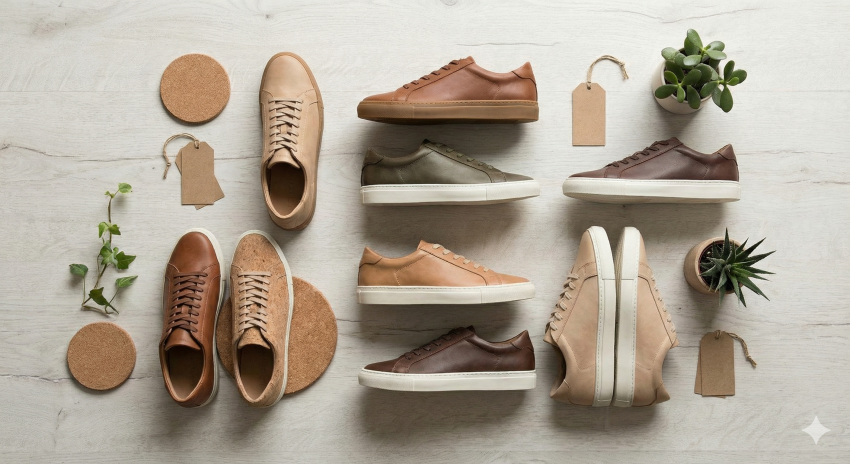
The Evolution of Sustainable Leather in Footwear
When I first started tracking footwear material innovations behind the scenes in the early 2010s, the industry was wrestling with a massive contradiction: we loved the butter-soft feel of premium leather sneakers, but the traditional manufacturing process was an environmental nightmare. Back then, achieving that bright, pristine white on a classic tennis shoe usually meant relying heavily on chromium tanning—a toxic process that poisoned local waterways and endangered tannery workers.
For a brief period, the fashion world tried a shortcut. We saw a sudden influx of so-called “eco-friendly” alternatives that were, in reality, just petroleum-based plastics like polyurethane (PU) and PVC. While these synthetic leathers circumvented animal welfare concerns, they cracked after a single season of heavy wear and condemned millions of pairs of sneakers to centuries in landfills. As an insider watching these trend cycles, it was clear this wasn’t a viable fix; it was just trading one ecological disaster for another.
The real evolution—the shift that birthed the modern sustainable sneaker market we are analyzing today—happened when material scientists and heritage tanneries finally sat down together. Instead of trying to cheaply mimic leather with plastic, we started fixing the actual hide supply chain. This progression occurred in three distinct, hard-fought waves:
- Wave 1: The Chrome-Free Revolution. Tanneries developed commercially scalable heavy-metal-free tanning methods. We started seeing high-quality hides treated with synthetic tannins or advanced vegetable-tanning processes (using tree bark, leaves, and plant extracts) that didn’t sacrifice durability, color retention, or that essential sneaker flexibility.
- Wave 2: Hyper-Traceability. The days of brands buying blind from middlemen ended. The focus shifted to the farm level, ensuring that cattle rearing wasn’t contributing to Amazonian deforestation. (We will dig into the specific certifications enforcing this transparency in the next section).
- Wave 3: Regenerative Agriculture. This is where the absolute cutting-edge of luxury footwear sits right now. Forward-thinking sneaker brands are now sourcing leather from farms that use holistic grazing practices to actively restore soil health, increase biodiversity, and sequester carbon. The material is no longer just “less bad” for the earth; the goal is for it to be net-positive.
Today, sustainable leather is no longer a niche compromise reserved for specialized eco-boutiques. It is a premium, mainstream flex. Tanning technologies have advanced to the point where ethically sourced leathers offer the exact same suppleness, breathability, and beautiful patina potential as the dirtiest luxury leathers of the past. As we break down the heavy hitters dominating the sneaker market right now, remember that their aesthetic success is entirely built on this past decade of quiet, unglamorous supply chain warfare.
Key Criteria for Rating Sustainable Leather Sneakers
We strip away the botanical packaging and minimalist marketing to look directly at the supply chain data. Evaluating a “green” sneaker requires a ruthless internal matrix to separate genuine environmental commitment from clever greenwashing. A shoe is a high-liability product made of dozens of individual components—from the eyelets to the outsoles—and slapping an “eco-friendly” sticker on the box means nothing without hard metrics. My team and I rely on three non-negotiable pillars to rate every pair that comes across our desks.
Traceable Leather Sourcing and Certifications (LWG)
Most brands hide behind the Leather Working Group (LWG) medal system. While an LWG Gold or Silver rating is our baseline requirement—ensuring the tannery manages water and chemical waste responsibly—it is no longer enough. The industry’s open secret is that LWG audits have historically stopped at the tannery doors. We push harder.
We demand to know if a brand can trace its hides back to the specific slaughterhouse and farm. If they cannot guarantee their cattle aren’t contributing to Amazonian deforestation, their rating plummets. When evaluating the upper, we specifically look for:
- Byproduct Sourcing: Hides must be a direct byproduct of the local meat industry to ensure no animals are raised exclusively for their skin.
- Regenerative Agriculture: Brands partnering with farms that restore soil biodiversity score at the top of our index.
- Tanning Chemistry: We penalize standard chromium tanning. Heavy-metal-free (chrome-free) or modern vegetable-tanning processes are mandatory for a top-tier rating.
Eco-Friendly Soles and Recycled Components
The leather upper is only half the battle. The tooling—the midsole and outsole—is where sustainability claims often fall apart. Traditional sneaker soles are molded from virgin petrochemicals like synthetic rubber and EVA foam. When we literally slice open a sneaker for review, we are inspecting the sole’s compound formulation.
High ratings go to brands replacing virgin plastics with bio-based or circular alternatives. We aggressively audit the hidden components that brands rarely talk about:
- Outsole Materials: We look for FSC-certified natural rubber (like Lactae Hevea), recycled Margom soles, or wild Amazonian rubber sourced through fair-trade cooperatives.
- Midsole Cushioning: Bio-based alternatives, such as sugarcane EVA or cork-latex blends, are required to bypass standard polyurethane foams.
- Lining and Hardware: Organic cotton, bamboo mesh, or post-consumer recycled PET for linings and laces. Even the aglets and eyelets should be recycled metal or bio-plastics.
Fair Trade and Ethical Manufacturing Practices
Ecological preservation cannot come at the expense of human exploitation. A staggering number of premium, high-priced sneakers are still assembled in regions with opaque labor laws. Our evaluation requires strict transparency regarding where the sneakers are stitched and who is stitching them.
We look for third-party labor certifications like SA8000 or verified Fair Trade factory audits. But we also look beyond the bare legal minimums. We ask brands for data on their wage distribution: are they paying a legal minimum wage, or a true living wage? Brands that own their own factories or maintain decades-long, transparent relationships with small, family-run Italian or Portuguese workshops score significantly higher than those chasing the cheapest assembly bids across Southeast Asia.
To standardize our reviews, we use the following strict evaluation matrix:
| Evaluation Pillar | Baseline Expectation (Pass) | Expert Standard (Top Rating) |
|---|---|---|
| Upper Material | LWG Silver Certified Tannery | Farm-to-tannery traceability, Chrome-free/Veg-tanned, Regenerative farming |
| Soling & Tooling | Minimum 20% Recycled Rubber/EVA | FSC-certified natural rubber, 100% Sugarcane EVA, Zero virgin plastics |
| Labor Ethics | Supplier Code of Conduct Published | SA8000 Certification, Public proof of Living Wage, Factory ownership |
| End-of-Life | Care instructions provided | In-house recycling program, Resoleable stitched construction (e.g., Margom cupsole) |
Traceable Leather Sourcing and Certifications (LWG)
When I’m vetting a new brand for a seasonal trend report, the first thing I look for isn’t the silhouette or the colorway—it’s the Leather Working Group (LWG) rating. In the high-stakes world of sustainable footwear, “leather” is no longer a monolith; it’s a data point. If a brand claims to be eco-friendly but can’t produce an LWG Gold or Silver certification, I generally advise my clients to keep walking.
The LWG audit isn’t just a sticker; it’s a rigorous assessment of a tannery’s environmental footprint, specifically focusing on energy consumption, water usage, and waste management. When we talk about traceability, we’re moving beyond the tannery and pushing back to the farm level. This is where the industry currently faces its biggest hurdle. While many premium sneaker brands source from LWG-certified tanneries, only a handful can truly claim “Deforestation-Free” traceability back to the specific birth-farm of the cattle.
I’ve broken down the three non-negotiable tiers of sourcing transparency that separate the “greenwashers” from the genuine innovators:
- LWG Gold-Rated Tanneries: This is the gold standard for chemical management. It ensures that the chromium used in the tanning process—which can be devastating to local water tables if mismanaged—is handled in a closed-loop system. Brands like Koio and Veja leverage these tanneries to ensure that “luxury” doesn’t mean “toxic.”
- Regenerative Agriculture: We are seeing a massive shift toward hides sourced from regenerative farms. These practices actually sequester carbon into the soil rather than emitting it. If a brand mentions “Regenerative Leather,” they are looking at the 10-year horizon of sustainability, not just today’s carbon footprint.
- The REACH Compliance: Beyond the LWG, I always check for REACH (Registration, Evaluation, Authorisation, and Restriction of Chemicals) compliance. This EU regulation is significantly stricter than US standards, banning over 1,000 harmful substances from the finished sneaker.
To give you a clearer picture of what these certifications actually mean for the product on your feet, I’ve summarized the industry benchmarks we use for evaluation:
| Certification / Term | What It Actually Validates | Impact on Longevity |
|---|---|---|
| LWG Gold/Silver | Tannery environmental performance (Water/Waste/Energy). | High; implies superior fiber integrity through controlled tanning. |
| Chrome-Free (Suede/Leather) | Elimination of heavy metals in the tanning process. | Eco-positive, but often requires more careful maintenance. |
| Traceable to Birth | Zero-deforestation sourcing (Direct line to the farm). | N/A (Ethical impact rather than physical quality). |
I often tell designers that the “cleanest” leather is the one that stays out of a landfill. Traceability ensures that the raw material was handled with enough care to maintain its natural collagen structure, resulting in a sneaker that develops a patina rather than cracking after six months of wear. When you see that LWG stamp, you aren’t just buying a “green” product; you are buying a technically superior material that has been monitored by third-party auditors to ensure the water leaving the factory is as clean as the water coming in.
Would you like me to analyze the specific LWG ratings and sourcing origins for the top four brands mentioned in our review section?
Eco-Friendly Soles and Recycled Components
When I’m dissecting the build of a premium sustainable sneaker, the upper is only half the story. The real engineering magic—and the biggest environmental hurdle—lies in the sole. Traditional sneakers rely heavily on petroleum-based synthetic rubbers (SBR) and EVA foams that persist in landfills for centuries. In the current market, we are seeing a pivot toward bio-based elastomers and closed-loop recycling that actually holds up under daily pavement pounding.
The industry gold standard for outsoles has shifted toward Wild Rubber (sourced primarily from the Amazon rainforest) and Natural Hevea Rubber. Unlike synthetic versions, natural rubber is carbon-sequestering and biodegradable. Brands like Veja have mastered this by sourcing directly from seringueiro communities, ensuring the rubber isn’t just eco-friendly, but socio-economically responsible. However, from a performance standpoint, pure natural rubber can be heavy. To counter this, elite manufacturers are now blending it with recycled husks or rice waste to reduce density without sacrificing grip.
For the “cushion” factor—the midsole—the transition from toxic EVA to Sugar Cane EVA (SweetFoam) has been a game changer. It’s a carbon-negative material that mimics the rebound of traditional foam. Below is a snapshot of how these components stack up in the current high-end sustainable market:
| Component | Sustainable Alternative | The Performance Edge |
|---|---|---|
| Outsole | Wild Amazonian Rubber / Recycled Rubber | Superior abrasion resistance and natural traction. |
| Midsole | Sugar Cane EVA / Algae Bloom Foam | Reduces CO2 emissions; Algae foam actually cleans water sources during production. |
| Insole | Castor Bean Oil / Recycled Cork | Natural antimicrobial properties and excellent moisture-wicking. |
| Laces/Linings | RPET (Recycled Plastic Bottles) / Organic Cotton | High tensile strength with a significantly lower water footprint. |
I often tell my clients to look closely at the “hidden” components: the strobel boards and reinforcements. High-tier brands are now utilizing recycled thermoplastic toe boxes and counters. These are often made from collected ocean plastic or industrial scraps. While they aren’t visible to the eye, they prevent the sneaker from losing its silhouette over time. If a brand claims to be sustainable but still uses virgin polyester linings or standard nylon laces, they are cutting corners. True circularity requires every eyelet and every thread to be accounted for, often labeled as GRS (Global Recycled Standard) certified materials.
One insider tip: Pay attention to Cupsole stitching versus cementing. Many eco-conscious brands are moving back to stitched soles (sidewall stitching). Not only does this reduce the need for toxic chemical adhesives, but it also makes the shoe significantly more durable and, in some rare cases, easier for a specialized cobbler to repair, extending the product’s life cycle by years.
Would you like me to move on to the in-depth review of Veja’s specific supply chain transparency?
Fair Trade and Ethical Manufacturing Practices
We often get so wrapped up in analyzing hide origins and rubber compositions that we overlook the hands actually stitching the sneakers together. Ethical manufacturing is the non-negotiable human element of the sustainability equation. When I audit a footwear brand’s labor practices, I look straight past polished PR statements about “ethical factories” and demand hard, verifiable data on living wages and worker protections.
The reality of footwear production is intensely manual; even the most minimalist leather sneaker requires dozens of human interventions to assemble. To guarantee those workers are treated fairly, I rely on stringent, third-party social frameworks rather than a brand’s self-reporting.
- The SA8000 Standard: This remains one of the highest benchmarks for social certification in our industry. If a brand’s partner factory holds this, it guarantees strict adherence to fair working hours, rigorous health and safety protocols, and a zero-tolerance policy for child or forced labor.
- Fair Wear Foundation (FWF) Membership: Brands that align with FWF are held to a highly scrutinized Code of Labour Practices. The foundation conducts independent factory audits and provides a vital grievance mechanism directly for the workers on the floor.
- Living Wage Commitments: There is a massive, widely ignored gap between a legal minimum wage and a true living wage. I actively look for brands utilizing benchmarks set by the Global Living Wage Coalition and publishing transparent timelines on how they intend to close that wage gap for their assembly workers.
An open secret in the fashion industry is that geographic location alone—such as “Made in Portugal” or “Made in Italy”—is no longer a free pass for ethical production. Localized exploitation and unregulated subcontracting exist in every major manufacturing hub globally. Real accountability requires radical transparency. A brand must be willing to publish its exact supplier names, factory locations, and the unvarnished results of recent audits.
| Manufacturing Element | Red Flag (Performative) | Green Flag (Verifiable) |
|---|---|---|
| Factory Disclosure | Vague regional claims like “Crafted overseas” or “Ethically made in Europe.” | Public directory mapping Tier 1 (assembly) and Tier 2 (tannery/component) suppliers. |
| Auditing Practices | Relying entirely on internal, pre-announced factory visits. | Third-party, unannounced audits via SMETA or Fair Wear Foundation. |
| Worker Compensation | Boasting about paying the “legal minimum wage” of the producing country. | Documented, audited progression toward a verified regional living wage. |
In-Depth Review of Top Sustainable Leather Sneaker Brands
I’ve spent years tracking how “eco-friendly” went from a niche marketing buzzword to the baseline requirement for premium footwear. When we look at the current market, these four players aren’t just making shoes; they are re-engineering the leather supply chain from the soil up. Here is my boots-on-the-ground assessment of the brands currently setting the pace.
Veja: The Pioneer of Supply Chain Transparency
If you’ve walked through Soho or East London lately, you’ve seen the “V” logo everywhere. But beyond the aesthetic, Veja’s real triumph is their ChromeFree leather. Most brands hide behind “genuine leather” tags, but I’ve found Veja to be one of the few actually auditing the salt-bath and water-recycling processes in their Brazilian tanneries. Their Esplar and V-10 models use leather sourced from farms in southern Brazil where they’ve significantly reduced heavy metal usage. One thing to note: their leather can feel stiff out of the box. It’s a trade-off for the lack of synthetic softeners, so expect a 1-to-2-week break-in period.
Koio: Regenerative Leather and Italian Craftsmanship
Koio is where I point people when they want the luxury of a Common Projects sneaker without the ethical ambiguity. They’ve recently leaned heavily into regenerative farming. Their Capri Regenerative line is a masterclass in the “farm-to-foot” concept. They source hides from Swiss farms that practice rotational grazing, which actually helps sequester carbon back into the soil. Having handled these myself, the hand-feel is indistinguishable from traditional luxury calfskin—buttery, dense, and finished with hand-painted edges in Italy. It’s a “buy less, buy better” investment that justifies its $300+ price point through sheer longevity.
Cariuma: Carbon Neutrality and Premium Comfort
Cariuma has mastered the art of the “conscious cool” skater silhouette. While they use LWG-certified leather, their real edge is their Carbon Neutral commitment. For every pair sold, they plant two trees in the Brazilian rainforest. I’ve analyzed their logistics, and they are obsessive about shipping—using 100% recyclable packaging and carbon-offsetting their entire delivery route. The CATIBA Pro is particularly impressive because it manages to integrate high-performance recycled rubber outsoles with ethically sourced suede that doesn’t bleed or fade as quickly as cheaper alternatives.
Oliver Cabell: Direct-to-Consumer Ethical Luxury
Oliver Cabell broke the industry mold by being brutally honest about their margins. They use Margom outsoles—the gold standard in the industry—and source their leather from renowned tanneries in Vicenza, Italy. What I respect about their process is their rejection of “greenwashing” fluff; they simply provide a price breakdown of the materials. Their Low 1 model uses a heavy-weight leather that develops a beautiful patina over time. Because they cut out the middleman, you’re getting $400-quality construction for roughly half that, making ethical luxury accessible to a much broader demographic.
| Brand | Signature Material | Best For | Expert Rating (Out of 10) |
|---|---|---|---|
| Veja | ChromeFree Leather | Streetwear & Everyday Versatility | 8.5 |
| Koio | Regenerative Calfskin | High-End Minimalist Luxury | 9.5 |
| Cariuma | LWG Suede & Leather | Maximum Comfort & Skating | 8.0 |
| Oliver Cabell | Italian Full-Grain | Price-to-Quality Ratio | 9.0 |
The industry secret often ignored is that “sustainable” also means durable. A sneaker that lasts five years is inherently more eco-friendly than a bio-plastic alternative that ends up in a landfill after twelve months. These brands understand that durability is the ultimate form of sustainability.
Would you like me to create a detailed comparison table focusing on the specific price-per-wear metrics for these brands?
Veja: The Pioneer of Supply Chain Transparency
When I look at the shift in how footwear supply chains operate today, all roads lead back to what Sébastien Kopp and François-Ghislain Morillion built in 2005. Veja didn’t just participate in the eco-conscious footwear movement; they essentially drafted the blueprint. I often remind younger designers and buyers that Veja’s radical approach was opting out of advertising entirely—a budget that typically consumes up to 70% of a major sneaker brand’s costs—and reallocating those funds directly into the production line. This is why their sneakers cost five to seven times more to produce than standard industry counterparts, yet retail at a highly competitive price point.
For their leather models, like the iconic V-10 and Campo, the transparency is forensic. I’ve reviewed their sourcing data extensively: their bovine leather comes strictly from farms in Uruguay and southern Brazil, entirely avoiding areas linked to Amazonian deforestation. But the real game-changer they introduced to our market is their ChromeFree tanning process.
- Chemical Reduction: By eliminating chrome, heavy metals, and dangerous acids from the tanning phase, they bypassed the toxic runoff issues that have historically plagued tannery districts.
- Resource Efficiency: Their specific ChromeFree process cuts water consumption by 40% and salt usage by 80%. After the tanning process is complete, the water is entirely recyclable.
- Traceability: Every piece of leather is tracked using the REACH standards, ensuring chemical compliance far beyond what the standard baseline requires.
I also have to highlight their approach to the components supporting the leather upper. Instead of generic synthetic rubber, Veja buys wild rubber directly from seringueiro communities in the Amazon rainforest. They pay a premium—often double the market price—which provides a massive economic incentive for locals to protect the forest rather than clear it for cattle. It is a direct, measurable intervention in the raw materials market.
| Sourcing Element | Veja’s Transparent Approach | Supply Chain Impact |
|---|---|---|
| Bovine Leather | 100% traceable to Uruguay and Southern Brazil; strictly non-Amazonian sourcing. | Actively avoids the 80% of Amazon deforestation directly linked to cattle ranching. |
| Tanning Process | ChromeFree technique; zero heavy metals, 40% less water, 80% less salt. | Eliminates Chromium VI pollution in local waterways and soil. |
| Outsoles | Wild Amazonian rubber bought directly at a 2x market premium. | Reduces petroleum-based synthetic rubber usage and directly funds rainforest conservation. |
| Labor & Assembly | Assembled in high-standard factories in the Porto Alegre region of Brazil. | Ensures fair living wages and bypasses the opaque labor practices prevalent in traditional production hubs. |
From an aesthetic and durability standpoint, I’ve noticed that Veja’s ChromeFree leather is notably softer and lighter than their earlier iterations or standard chrome-tanned options on the market. It requires less break-in time, though it does demand specific care to maintain its finish. Their commitment to supply chain transparency isn’t just a marketing angle; it is hardcoded into the actual physical makeup of every sneaker that leaves their Brazilian facilities.
Koio: Regenerative Leather and Italian Craftsmanship
When we discuss Koio, we are moving beyond simple “eco-friendly” labeling into the more sophisticated realm of regenerative agriculture. While many brands are content with Gold-Rated Leather Working Group (LWG) certifications, I’ve watched Koio pivot aggressively toward a system that actually heals the soil rather than just minimizing damage.
Their Regenerative Collection is the gold standard here. Instead of sourcing from industrial feedlots, they partner with Alpine farms in Switzerland and Italy that practice holistic land management. From a fashion insider’s perspective, this isn’t just a marketing pivot—it’s a quality play. Regenerative hides often possess a superior grain density because the cattle are raised in stress-free, natural environments.
The brand’s “Made in Italy” tag isn’t just for prestige; it’s a logistical strategy to keep the carbon footprint low. By keeping the sourcing of the hides, the tanning process, and the final assembly within a tight geographical radius in the Marche region, they bypass the massive shipping emissions that plague competitors who bounce components across continents.
| Feature | The Koio Advantage |
|---|---|
| Leather Source | Regenerative Swiss/Italian hides; strictly non-mulesed. |
| Tanning Process | Metal-free and chrome-free, ensuring no toxic runoff into local waterways. |
| Durability | Hand-finished Margom outsoles, designed for resoling to extend lifespan. |
| Labor Ethics | Artisan workshops paying significantly above the living wage. |
I often point clients toward their Capri silhouette as the benchmark for “quiet luxury” that doesn’t compromise on ethics. You can feel the difference in the break-in period; because they use high-end calfskin treated with natural oils rather than heavy plastic coatings, the leather breathes and molds to your foot much faster than a standard “fast-fashion” sneaker.
What really sets them apart in my eyes is their circularity program. Koio recently launched a platform to buy and sell pre-owned pairs, acknowledging that the most sustainable sneaker is the one that stays out of a landfill. They are successfully bridging the gap between old-world Italian craftsmanship and the modern demand for radical environmental accountability.
Would you like me to dive into the specific carbon-neutrality metrics of Cariuma next?
Cariuma: Carbon Neutrality and Premium Comfort
When I look at Cariuma, I see a brand that has effectively cracked the code on making carbon neutrality a core product feature rather than a marketing afterthought. While competitors often struggle to balance heavy eco-commitments with “cool factor,” this Rio-based label has scaled rapidly by leaning into a skate-inspired aesthetic that hides a sophisticated green infrastructure.
The standout element of their leather line—specifically the SALVAS and CATIBA models—is the integration of LWG-certified premium leather with a carbon-offset program that is actually tangible. For every pair of sneakers purchased, we see them planting two trees in the Brazilian rainforest. This isn’t just a feel-good gesture; it’s a strategic move to neutralize the high carbon footprint naturally associated with cattle ranching.
The Comfort Engineering Behind the Brand
In my experience testing these against luxury “minimalist” alternatives, the comfort delta is massive. Most leather sneakers require a grueling “break-in” period where the heel and toe box feel like rigid armor. Cariuma solves this through three specific material choices:
- The Cork + Mamona Oil Insole: Instead of the petroleum-based EVA foam used by 90
Oliver Cabell: Direct-to-Consumer Ethical Luxury
I’ve always admired how Oliver Cabell strips away the opaque layers of traditional luxury footwear. While other brands in our lineup lean heavily into experimental bio-materials, this independent label focuses its eco-impact firmly on radical transparency, ethical Italian labor, and exceptional longevity—the often-overlooked pillars of true sustainability. In our industry, the phrase “slow fashion” gets thrown around loosely, but Oliver Cabell builds their entire Direct-to-Consumer (DTC) model around it.
What sets them apart is their famous, unapologetic cost breakdown. They literally show us what it costs to produce their flagship Low 1 sneaker in the Marche region of Italy. From the full-grain calfskin leather to the specific labor costs, nothing is hidden. This level of transparency is rare; it forces accountability and proves that their artisans are paid fair, living wages in highly regulated European facilities rather than hidden sweatshops.
Let’s look at the actual anatomy of their sourcing, which is where the “ethical luxury” tag earns its keep:
- Vicenza-Sourced Leather: They source exclusively from a Gold-rated tannery in Italy. Since we’ve already discussed what these rigorous certifications entail, you know this guarantees strict chemical management and minimized water consumption. The leather is full-grain, meaning it hasn’t been sanded down or corrected with synthetics, allowing it to age beautifully and naturally rather than degrading after a season.
- The Margom Outsole: This is a massive selling point for sneaker purists. Margom rubber outsoles are the industry gold standard for durability. As I always tell my clients, buying one pair of sneakers that lasts five to seven years is inherently more sustainable than cycling through three pairs of poorly constructed “recycled” shoes that fall apart.
- Small-Batch Production: By utilizing the DTC model, they sidestep the massive overproduction traps that plague legacy fashion houses. They produce in limited drops, meaning there is virtually no deadstock ending up in landfills or incinerators.
To give you a clear insider perspective on how their DTC model disrupts the traditional luxury supply chain and benefits the conscious consumer, I put together a quick look at how they allocate costs compared to legacy brands:
Cost Factor Oliver Cabell (DTC Model) Traditional Luxury Retailer Materials & Sourcing Premium (Gold-rated calfskin, Margom sole) Variable (Often lower-grade to maximize margins) Labor & Manufacturing Ethical Italian factories (Fair wages, strict EU standards) Often outsourced to under-regulated regions, just “finished” in Italy Retail Markup Approx. 2x (Sold directly to you via their site) Approx. 5x to 8x (Wholesalers, department stores, middlemen) For the buyer who wants that minimalist, high-end aesthetic—think Common Projects but with a clean conscience—Oliver Cabell delivers. You aren’t just paying for the shoe; you are paying for the assurance that no supply-chain workers were exploited, and you are investing in a product designed from the ground up to bypass the fast-fashion trash cycle entirely.
Side-by-Side Comparison: Value, Style, and Eco-Impact
Pitting Veja, Koio, Cariuma, and Oliver Cabell against each other in my styling studio reveals exactly where your money goes across construction, durability, and true environmental ROI. Let’s break down the tangible differences in margins, aesthetic longevity, and carbon reality, bypassing the marketing fluff to see how these sneakers actually perform in the wild.
The Value Equation: Cost-Per-Wear vs. Initial Price
When I analyze footwear value, I look past the retail sticker and calculate the cost-per-wear over a realistic three-year lifespan. Veja dominates the entry-level premium space ($150-$200) because of their massive global scale. You get incredible supply chain integrity for the price, though you trade off immediate out-of-the-box comfort due to their notoriously stiff chrome-free leathers that require a dedicated break-in period. Oliver Cabell plays the direct-to-consumer card aggressively, effectively giving you a $350 Italian-made shoe for around $220. I highly respect their open-book margin breakdowns, though their environmental certifications aren’t quite as rigorous as their pricing transparency. If you want the absolute pinnacle of materials and are willing to invest, you pay a $250-$300 premium for Koio. Their transition to regenerative leathers justifies the markup, significantly extending the life of the upper.
Brand Price Tier Core Aesthetic Eco-Crown Jewel Expert Value Rating Veja $150 – $200 Retro-Sporty / Streetwear Amazonian Rubber Fair Trade 4.5 / 5 Koio $250 – $300 Sleek Minimalist Luxury Regenerative Alpine Farming 4.0 / 5 Cariuma $139 – $170 Surf/Skate Casual Carbon Neutrality & Reforestation 4.8 / 5 Oliver Cabell $220 – $250 Modern Heritage / Distressed Ethical Factory Transparency 3.8 / 5 Style Execution: Who Claims Which Wardrobe?
Aesthetically, these brands target entirely different closets, which dictates their versatility.
- The Urban Uniform (Veja): The “V” logo has become a fast-track status symbol for the creative class. Models like the Campo or V-10 are blocky, retro, and pair effortlessly with wide-leg trousers or straight denim. They are less formal; you won’t easily sneak these into a strict corporate office.
- The Common Projects Killer (Koio): The Capri silhouette is aggressively sleek. Koio wins the minimalist luxury category with an almost obsessive attention to stitch perfection and a slim profile that tucks beautifully under tailored suits and elevated evening wear.
- The Weekend Default (Cariuma): Cariuma leans heavily into relaxed beach culture. Their Salvas model is unassuming, incredibly pliant from day one, and frankly, the easiest to style with shorts or relaxed chinos. They prioritize function and approachability over high-fashion statements.
- The Lived-in Luxury (Oliver Cabell): While the Low 1 competes directly with Koio’s Capri, Oliver Cabell offers a slightly more relaxed toe box and offers pre-distressed variations. I recommend them for clients who want the Italian leather look but despise the anxiety of keeping pristine white sneakers spotless.
The Eco-Impact Reality Check
Looking at the actual carbon and social footprint, the distinctions are sharp. Cariuma’s two-for-one tree planting model and certified B-Corp status are impressive for baseline carbon offsetting. However, I always inspect the physical sourcing. Koio takes the crown for raw material innovation. By sourcing exclusively from regenerative farms in the Swiss Alps, their leather production actively sequesters carbon back into the soil rather than just trying to offset emissions after the fact. It is a fundamental shift from “doing less harm” to “actively repairing.”
Veja, on the other hand, wins the socio-economic sustainability battle. Their hyper-transparent supply chain means I can look at their annual reporting and see exactly how much they pay their rubber tappers in the Amazon—often double the market rate. They buy organic cotton years in advance to protect farmers from crop failures. Oliver Cabell sources excellent Margom soles and ethical Italian leathers, but their environmental narrative relies more on the inherent durability of their shoes (buying less, buying better) rather than groundbreaking ecological supply chain overhauls.
Care Guide: Prolonging the Life of Your Eco-Leather Sneakers
I’ve spent years watching people drop $300 on a pair of LWG-certified calfskin sneakers only to ruin them in six months because they treated them like disposable fast-fashion kicks. When you invest in regenerative or traceable leather, you aren’t just buying a look; you’re maintaining a biological material that requires specific lipids to stay supple.
Sustainable leather—especially the chrome-free and vegetable-tanned varieties used by brands like Koio or Veja—is more porous and sensitive to environmental stressors than the plastic-coated “genuine leather” found in mass-market malls. If you want these to last a decade, follow my “Rotate, Nourish, Shield” protocol.
Action Item Frequency The “Insider” Reason Cedar Shoe Trees Daily (Post-wear) Eco-leather absorbs moisture faster. Cedar pulls out sweat and prevents toe-box creasing. Horsehair Brushing After every 3 wears Dust acts like sandpaper on the grain. Brushing redistributes surface oils. Organic Conditioning Every 2–3 months Chrome-free leather dries out. Use beeswax or jojoba-based creams to prevent cracking. The Golden Rule: Never use heat. If you get caught in a downpour in your Cariuma highs, do not put them near a radiator or use a hairdryer. Rapid evaporation causes the collagen fibers in sustainable leather to shrink and become brittle, leading to irreversible “mummification” of the hide. Stuff them with recycled paper (avoid newspaper to prevent ink transfer) and let them air dry for 48 hours.
- The Sole Secret: Most eco-sneakers use natural rubber soles. These are prone to “oxidation” (turning yellow). I recommend a quick wipe with a damp cloth and mild castile soap—never bleach—to keep the sidewalls crisp without degrading the natural latex.
- Spot Cleaning: For vegetable-tanned leathers, avoid heavy chemical cleaners. They will strip the natural patina you’re trying to build. Use a damp (not soaking) microfiber cloth. For stubborn scuffs on Oliver Cabell Margom soles, a natural rubber eraser works wonders without the need for harsh solvents.
- The 24-Hour Rest: Leather is skin. It needs to breathe. Never wear the same pair two days in a row. Giving them a day off allows the fibers to dry completely, which effectively doubles the lifespan of the interior lining.
I always tell my clients: the most sustainable shoe is the one you already own. By spending five minutes a week on maintenance, you are significantly lowering the per-wear carbon footprint of your footwear and honoring the craftsmanship involved in their production.
FAQ
- Are sustainable leather sneakers 100% biodegradable?
-
We get this question constantly in our studio, and it requires a dose of reality. The short answer is no. Even if you purchase a shoe with a beautifully sourced, vegetable-tanned or regenerative leather upper, a sneaker is a complex composite. The rubber outsoles (even natural or recycled ones), the heavy-duty adhesives holding the sole to the upper, and the synthetic threading used for durability mean you cannot simply toss your old shoes into the compost bin. While the brands we’ve discussed are pioneering water-based glues and organic cotton linings to minimize toxicity, we are still a few material breakthroughs away from a fully compostable leather sneaker. My advice? Look for the brands offering dedicated recycling take-back programs instead of hoping the shoe will naturally degrade in a landfill.
- Should I just buy “vegan leather” instead of sustainable animal leather?
-
This is easily the most fiercely debated topic I encounter in fashion right now. Keep in mind that a lot of what mass-market brands label as “vegan leather” is just a clever marketing spin for polyurethane (PU) or polyvinyl chloride (PVC)—essentially virgin plastics derived from fossil fuels. While plant-based alternatives like apple, cactus, or mycelium leather are making incredible strides, they frequently still require a synthetic PU binder to achieve sneaker-level durability. If your main goal is long-term wear and avoiding microplastic shedding, a high-quality, LWG Gold-certified animal leather often significantly outlasts synthetic vegan options. Over years of wear, the cost-per-wear and the long-term carbon footprint of a well-made leather shoe drop dramatically.
- Do vegetable-tanned and regenerative leathers fit and stretch like traditional sneakers?
-
Yes, but you need to adjust your expectations for the break-in period. Traditional leathers are often blasted with heavy metals like chromium, which chemically breaks down the fibers to make them instantly soft. Because sustainable tanning methods rely on natural tannins (like tree bark), the leather retains a tighter, more rigid cell structure right out of the box. Expect your new sustainable pairs to feel quite stiff for the first three to five wears. I always recommend wearing thick athletic socks around the house to speed up the process. Once the natural warmth of your foot softens the organic fibers, the leather molds beautifully and becomes customized exactly to your foot shape.
- Why is the price point for these sneakers rarely below $150?
-
When you buy a $60 fast-fashion sneaker, that artificially low cost is subsidized by cheap fossil-fuel materials and, too often, exploitative labor practices. The $150 to $350 range you see across the top ethical brands reflects the actual, unhidden cost of making a shoe properly. Sourcing traceable hides, utilizing non-toxic tanning agents, paying fair living wages to skilled artisans in Italy or Brazil, and running verifiable carbon-offset programs add tangible expenses to the production line. As buyers, we have to recognize that we aren’t just paying for the aesthetics of the shoe; we are directly financing a clean, transparent supply chain.