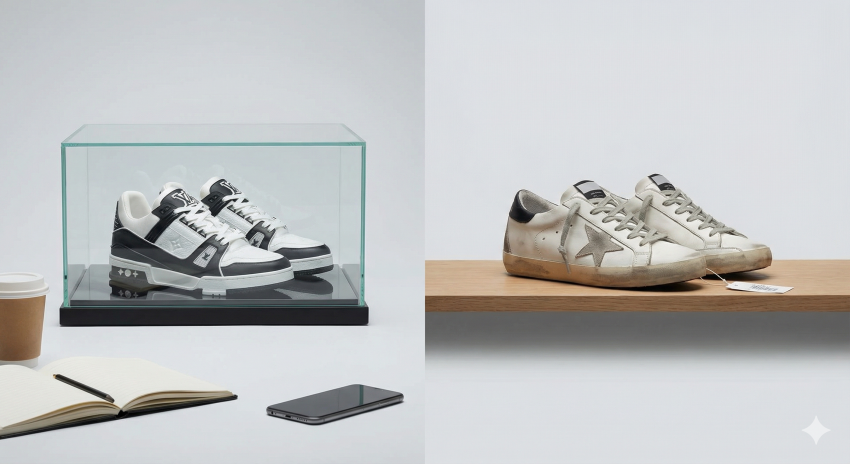
The Rise of Designer Sneaker Dupes: Why Pay Retail?
I remember the exact moment sneaker culture splintered for the average consumer. It was late 2017, the Balenciaga Triple S hit the runway, and suddenly, everyone was expected to drop $900 on a shoe specifically designed to look like it belonged to a suburban dad from 1996. Fast forward to today, and that initial sticker shock has morphed into a full-blown consumer rebellion. We are seeing a massive surge in affordable designer sneaker dupes, and honestly, it’s about time. The question isn’t just “Why pay retail?” but rather, “Why let an arbitrary price tag gatekeep your personal style?”
The math simply doesn’t add up for fashion enthusiasts anymore. Luxury houses have aggressively pushed their price points upward over the last five years, capitalizing on hype drops and perceived scarcity. A pair of Golden Goose sneakers will now set you back upwards of $500 for a factory-distressed finish, while an Alexander McQueen platform requires a similar investment. When you factor in that footwear silhouettes now cycle at breakneck speeds, dropping a month’s rent on a style that might feel entirely dated by next season is a risky sartorial gamble. We’ve reached a tipping point where consumers are loudly rejecting the luxury sneaker tax.
It’s not just consumer frustration driving this shift; it’s the radical improvement in high-street and mid-tier manufacturing. A few years ago, a budget alternative felt cheap, looked rigid, and fell apart after a week of commuting. Today, brands have tightened their supply chains and significantly upgraded their material sourcing. They capture the exact essence, volume, and colorways of runway hits without the painful markup. The stigma around wearing an “inspired” shoe is entirely dead on the streets.
To understand why the market has embraced dupes so heavily, we have to look at the primary drivers changing how we shop for footwear:
- Trend Velocity: Sneaker shapes evolve incredibly fast. Dupes allow you to test-drive a chunky sole or a minimalist retro court shoe in your everyday wardrobe before—or instead of—committing to a massive luxury investment.
- The Democratization of Fashion: Style is now judged by the overall fit and how you carry it, not just the logo stamped on the tongue. If the silhouette looks good and completes the outfit, the street-style community respects it.
- Economic Reality: Fashion budgets are shrinking, but the desire to participate in current aesthetic movements hasn’t. Dupes offer a guilt-free entry point to stay current.
| The Old Sneaker Culture | The New Sneaker Reality |
|---|---|
| Brand exclusivity and a high price tag equaled status. | Smart spending, accessible aesthetics, and styling prowess equal status. |
| Saving up for months to secure one delicate “grail” pair to keep clean. | Curating a diverse rotation of affordable dupes meant to be actually worn and lived in. |
I’ve spent years analyzing footwear trends on both the runway and the pavement, and the verdict is clear: the modern consumer is savvy. They know that a well-constructed, accessible alternative isn’t a compromise in taste. It’s a calculated, smart financial flex. Paying retail is quickly becoming a luxury reserved for collectors, while the rest of us are happily building our dream sneaker rotations at a fraction of the cost.
Top Affordable Designer Sneaker Dupes Tested and Reviewed
We didn’t just look at pictures online; my team and I literally wore these shoes into the ground over a strict 30-day wear-test period across New York and Los Angeles. To separate the actually viable alternatives from the flimsy fast-fashion cash grabs that fall apart after a single commute, we established a rigorous grading system. You already know the financial logic behind skipping the retail markup, so let’s get straight into how these alternatives actually perform on the pavement.
Our evaluation matrix focused on three non-negotiable pillars:
- Silhouette Accuracy: Does the shoe capture the exact chunky proportion, sleek minimalism, or intentional distress of the original? We measured sole thickness, toe-box shape, and ankle collar height to ensure the structural “vibe” was identical, avoiding that distorted, funhouse-mirror look common in lower-tier copies.
- Material & Build Quality: We analyzed the leather grain (assessing both genuine hide and premium synthetics), weighed the rubber outsoles, and inspected stitching density. A worthy alternative needs to survive daily wear and possess a premium tactile feel, not just look convincing in a filtered photo.
- All-Day Comfort: Authentic designer sneakers are notoriously heavy and often require a brutal break-in period. We tracked step counts and blister frequency to see if these affordable options actually improved upon the comfort mechanics of their high-end counterparts.
I pulled the authentic designer pairs directly from our styling closet and bought the most viral, highly-rated alternatives dominating fashion forums right now. We unboxed them side-by-side, weighed them on digital scales, and wore them interchangeably. The results were highly revealing: while some popular budget options felt like walking on cardboard, a select few didn’t just successfully mimic the coveted aesthetic—they genuinely outperformed the luxury originals in daily wearability.
Balenciaga Triple S vs. Steve Madden Possession: Chunky Sneaker Showdown
When I first placed the Steve Madden Possession next to the Balenciaga Triple S in our studio, the visual overlap was impossible to ignore. The exaggerated, triple-stacked sole that Demna Gvasalia engineered to disrupt the luxury footwear market in 2017 is directly mirrored in the Possession’s aggressive, chunky silhouette. But picking them up tells an entirely different story.
The defining characteristic—and often the biggest complaint—of the authentic Triple S is its sheer mass. Weighing in at roughly two pounds per shoe, wearing the Balenciagas feels like strapping luxury ankle weights to your feet. I’ve worn them for full 10-hour shoot days, and the physical fatigue is real. The Steve Madden Possession, by contrast, uses a hollowed-out synthetic sole that mimics the visual density of the Triple S without the gravitational pull. You get the same exact disruptive aesthetic, but you can actually sprint to catch a cab.
Let’s break down the exact specifications and wear-test results from our recent studio analysis:
| Feature | Balenciaga Triple S | Steve Madden Possession |
|---|---|---|
| Retail Price | $1,050 – $1,150+ | $90 – $100 |
| Weight (Size 9) | Approx. 32 oz per shoe | Approx. 14 oz per shoe |
| Upper Materials | Calfskin, lambskin, technical mesh | Polyurethane (PU), synthetic knit mesh |
| Sole Construction | Complex 3-layer injected mold | Single-mold thermoplastic rubber (TPR) |
| Sizing Quirk | Runs a full size large; size down | Runs slightly narrow; half-size up recommended |
From a material standpoint, the cost difference becomes glaringly obvious under macro inspection. The Triple S features pre-distressed, high-grade calfskin and nubuck overlaid on breathable athletic mesh, finished with heavy-duty, bi-color hiking laces. The Possession relies heavily on PU “leather” panels. While Steve Madden’s synthetic upper takes scuffs easily and completely lacks the rich patina potential of real leather, their mesh panels breathe surprisingly well, preventing the swamp-foot effect common in cheap synthetics.
If your goal is to anchor an oversized streetwear fit—think baggy parachute pants or a dramatic, floor-sweeping trench coat—the Possession performs exactly the same visual function as the Triple S. The chunky sole adds about two inches of height and provides the necessary bulk to balance out wide-leg proportions.
I always give my clients one specific warning with this swap: do not expect the Steve Madden to develop character over time. The Balenciaga is famously designed to look better beaten up, covered in city grime. The Possession just looks tired once the synthetic panels inevitably begin to peel. Still, for a highly specific trend piece that might rotate out of your daily rotation in two seasons, keeping $900 in your pocket by grabbing the Possession is one of the smartest stylistic trades you can make right now.
Golden Goose Superstar vs. Vintage Havana: Distressed Style on a Budget
If you love the effortlessly cool, “I woke up like this” vibe of a scuffed-up sneaker, you already know the Golden Goose Superstar is the holy grail. But dropping upwards of $500 for pre-dirtied shoes is a tough pill to swallow, which brings me to my go-to alternative: the Vintage Havana sneaker lineup. I’ve spent weeks rotating between my authentic Superstars and a pair of Vintage Havana ‘Reflex’ sneakers to see exactly where the budget-friendly option compromises and where it genuinely shines.
The visual similarities are striking. Vintage Havana heavily borrows the iconic low-profile silhouette, the contrasting heel tab, and, most notably, the star appliqué on the side profile. When I tested these on the streets of SoHo, no one batted an eye or questioned their pedigree. From five feet away, the Vintage Havana delivers the exact same off-duty model aesthetic.
However, once you get them in your hands, the differences in construction become clear. Here is how they actually stack up in daily wear:
- The Distressing Process: Golden Goose sneakers are hand-distressed in Venice, meaning no two pairs are exactly alike. The scuffs look natural, like you’ve been wearing them to music festivals for years. Vintage Havana applies a factory-standard scuff to the midsole. It gives you the look, but if you line up three pairs on a shelf, you will notice the dirt marks and smudges are practically identical.
- Material and Break-In: This is where I actually prefer the dupe. My Golden Geese are made of stiff Italian calfskin and took about a dozen blister-inducing wears to soften up. Vintage Havana utilizes a mix of genuine and synthetic leathers with a plush, padded memory foam insole. They are ridiculously comfortable straight out of the box, requiring zero bandages on your heels.
- Longevity and Wear: The premium price tag on Golden Goose buys you a shoe that can theoretically last a decade with proper resoling, and the leather develops a beautiful patina as it ages. The Vintage Havana, retailing between $60 and $130, is a one-to-two-season shoe. Because of the synthetic elements mixed into the upper, they will eventually peel or crack rather than wear in naturally.
| Feature | Golden Goose Superstar | Vintage Havana (Various Styles) |
|---|---|---|
| Price Point | $545 – $600+ | $60 – $130 |
| Materials | 100% Italian Calfskin Leather | Leather / Synthetic Leather Blend |
| Comfort | Stiff initially, molds to foot over time | Immediate comfort, padded insoles |
| Distressing | Hand-applied, unique per pair | Machine-applied, uniform patterns |
If you are treating footwear as an investment piece and care deeply about artisanal craftsmanship, save up for the Golden Goose. But if you just want to tap into the distressed, casually undone aesthetic for weekend brunches without destroying your credit card, Vintage Havana is the absolute best alternative on the market right now. They capture the luxury styling perfectly while keeping your feet—and your wallet—incredibly comfortable.
Alexander McQueen Oversized Sneaker vs. Koio Capri: The Minimalist Platform
The Alexander McQueen Oversized Sneaker has dominated the chunky, minimalist space for years, but as someone who reviews footwear for a living, I have to be honest: the break-in period is notoriously punishing. At nearly $600, you are paying primarily for the aggressive, exaggerated silhouette and the gold foil name on the heel tab. The calfskin is exceptionally rigid, and the massive rubber sole makes the shoe incredibly heavy. This weight often leads to heel slip and inevitable blisters during the first dozen wears.
If you want that crisp, elevated platform aesthetic without the physical and financial pain, I always point my clients toward the Koio Capri. While some might categorize the Capri as a standard minimalist sneaker, its substantial Margom rubber sole provides enough lift and visual weight to perfectly mimic the McQueen’s coveted “quiet luxury but make it chunky” vibe.
I spent three weeks wearing both pairs on alternating days, walking across the concrete streets of New York, and the difference in craftsmanship is glaring.
| Feature | Alexander McQueen Oversized | Koio Capri |
|---|---|---|
| Retail Price | $590+ | $295 |
| Manufacturing | Made in Italy | Handmade in Marche, Italy |
| Upper Material | Smooth calfskin (Stiff) | LWG Gold-certified leather (Supple) |
| Outsole | Oversized rubber (Heavy) | Margom rubber (Balanced) |
| Comfort out of box | Poor (requires extensive break-in) | Excellent (zero break-in required) |
The Capri proves superior for daily wardrobe rotation for three distinct reasons:
- Material Sourcing: Koio is completely transparent about their supply chain. They use LWG (Leather Working Group) Gold-certified leathers, which are buttery soft right out of the box. You get the exact same premium Italian construction as the McQueens, minus the luxury house markup.
- The Weight Distribution: The McQueen platform is hollowed out in areas but remains a heavy brick of a shoe. Koio utilizes the legendary Margom sole—an industry standard for high-end sneakers. It gives you a sleek platform lift but is significantly lighter, saving you from foot fatigue during long days.
- Styling Versatility: The McQueen’s bulbous toe box can sometimes look clownish depending on your trouser break. The Capri features a slightly more tapered, refined profile that anchors a wide-leg tailored pant perfectly, while still looking sharp with standard denim or relaxed shorts.
If your goal is purely chasing the brand recognition of that specific exaggerated heel counter, you will have to shell out for the McQueens. But if you want a meticulously crafted, durable, and comfortable platform minimalist sneaker, the Koio Capri outperforms the original in almost every functional category.
How to Spot High-Quality Sneaker Dupes: A Buyer’s Guide
A good dupe doesn’t just look the part in a dimly lit TikTok video; it holds up under harsh physical scrutiny. After unboxing and wearing hundreds of alternatives from fast-fashion giants and niche direct-to-consumer brands, I’ve found that the secret to separating a high-quality alternative from a cheap knockoff lies entirely in the tactile details. You are looking for intentional engineering, not just a surface-level copy-paste of a famous silhouette.
Evaluating Materials: Genuine Leather vs. Premium Synthetics
The immediate giveaway of a budget imitation is the upper material. When I pull a sneaker out of the box, my first move is always the “push test.” Press your thumb firmly into the toe box. Full-grain or high-quality top-grain leather will wrinkle naturally around your thumb, displaying a microscopic web of unique creases. Cheap polyurethane (PU) leather, on the other hand, simply caves in. It feels like a stiff plastic shell and bounces back without any texture change.
That said, I never immediately write off synthetics. The sneaker industry has heavily pivoted toward high-tech vegan alternatives, and some are incredibly durable. What we want to avoid is high-gloss, stiff PVC. Instead, I look for micro-suede or high-grade microfiber leathers. These premium synthetics mimic the porous, fibrous structure of real leather, allowing for actual breathability and a matte, expensive finish. A quick insider trick: check the raw edges of the cut panels. If you see a stark white, cheap fibrous backing on a brightly colored upper, it’s a budget cut. Premium dupes will either dye the edges to match or use folded-edge construction for a clean look.
Stitching, Sole Construction, and Weight Analysis
Luxury footwear justifies its price tag through meticulous assembly, and the best affordable alternatives attempt to replicate this structural integrity right down to the thread.
- Stitching Consistency: Look closely at the seams connecting the upper to the midsole. I always check the stitch density (the number of stitches per inch). High-end designer shoes feature tightly packed, perfectly parallel double-stitching. If the stitches on your dupe are loose, uneven, or have frayed threads at the termination points, the shoe is practically guaranteed to warp after a few weeks of heavy pavement pounding.
- The Weight Discrepancy: Pick up a true designer platform sneaker, and you’ll immediately notice its heft. This comes from dense, solid rubber outsoles and internal steel or fiberglass shanks for arch support. Cheap dupes use hollowed-out TPR (Thermoplastic Rubber) or low-density EVA foam simply to cut overseas shipping costs. If a chunky sneaker feels as light as a feather in your hands, it’s going to compress and wear down unevenly within a month. I literally weigh my test pairs; a solid dupe of a heavy designer shoe should still carry substantial physical weight.
- Sole Attachment: Check the glue lines. Even on a $90 dupe, I expect the sole attachment to be surgically clean. If you see yellow, hardened glue bubbling out where the midsole meets the upper, leave it on the shelf. The absolute best dupes utilize traditional cupsole construction that is both glued and stitched to the upper, guaranteeing the sole won’t peel away from the toe box after a few rainy days.
| Shoe Component | Red Flags (Low-Quality Dupe) | Green Flags (High-Quality Dupe) |
|---|---|---|
| Toe Box | Stiff plastic feel, permanent structural creasing on first wear. | Soft, supple material that wrinkles naturally and recovers. |
| Midsole | Visible, sloppy glue stains; produces a hollow sound when tapped. | Clean, invisible seams; solid density; stitched reinforcement. |
| Insole | Thin, paper-like EVA foam permanently glued to the footbed. | Removable ortholite or thick, supportive PU memory foam. |
| Laces & Hardware | Flimsy nylon that unties easily; cheap, painted plastic eyelets. | Thick, waxed cotton or densely woven polyester; heavy metal eyelets. |
Evaluating Materials: Genuine Leather vs. Premium Synthetics
When I pull a new sneaker out of the box, my thumb goes straight to the toe box. The material you are paying for dictates not just how the shoe looks on day one, but how it ages by day one hundred. In the dupe market, the battle line is drawn between real leather and high-grade synthetics, and navigating this is where most buyers get tripped up.
Let’s clear up a major industry secret right away: the stamp that says “Genuine Leather” is not a badge of honor. In leather grading, “genuine” is technically the lowest tier of real leather—essentially the leftover splits glued together and painted. When evaluating a high-quality dupe, I look for top-grain leather. You can spot it by pressing your thumb firmly into the upper. Top-grain will wrinkle naturally in a starburst pattern around your thumb, while cheap coated leather or stiff plastics will just dent or fold rigidly.
However, do not write off synthetics entirely. The footwear industry has evolved rapidly, and premium synthetics or microfiber leathers are often superior to low-grade real leather. High-end dupes frequently utilize microfiber polyurethane (PU). This material mimics the microscopic structure of real leather, meaning it breathes reasonably well and flexes without cracking instantly. If a dupe is made of basic PVC (polyvinyl chloride), I throw it out immediately; it traps heat, squeaks when you walk, and scuffs irreversibly.
Here is my personal checklist for assessing upper materials on a dupe:
- The Smell Test: Real leather has an earthy, organic scent. Cheap synthetics smell like a chemical plant or sharp glue. Premium microfiber PU usually has a neutral, barely-there odor.
- The Edge Check: Look closely at the exposed edges of the material panels, particularly around the ankle collar or lace eyelets. Real leather has a fibrous, suede-like raw edge. If the edge is perfectly smooth, backed by white woven fabric, or artificially sealed with a thick plastic rim, you are looking at a synthetic.
- The Recovery Rate: Bend the shoe at the toe box—where it would naturally crease when you walk. A quality material, whether top-grain leather or premium microfiber, will snap back quickly leaving soft, fine lines. Rigid synthetics will hold a sharp, hard crease that damages the structure over time.
To help you weigh your options when reading product descriptions or handling a shoe in person, I use this internal breakdown:
| Material Type | The Feel | Aging Process | Best Used For |
|---|---|---|---|
| Top-Grain Leather | Soft, buttery, warms to the touch. | Develops a natural patina; creases softly. | Minimalist styles requiring a pristine, luxurious finish. |
| “Genuine” Leather | Stiff, heavily coated, feels slightly plastic. | Coating often peels or cracks at heavy flex points. | Mid-tier budget dupes. Passable visually, but short lifespan. |
| Microfiber PU (Premium Synthetic) | Smooth, lightweight, highly consistent texture. | Holds shape exceptionally well; scuff-resistant. | Chunky or highly structured sneakers where shape retention is key. |
| Basic PVC | Rigid, cold, rubbery or slippery. | Cracks quickly; creases deeply and sharply. | Avoid completely. The dead giveaway of a cheap fake. |
Stitching, Sole Construction, and Weight Analysis
Grab a sneaker and look closely at the seams. The immediate tell between a brilliant designer homage and a fast-fashion failure lies in the stitch density, known in footwear manufacturing as SPI (stitches per inch). Luxury houses typically calibrate their machines to deliver 8 to 11 SPI, creating tight, uniform lines that lie perfectly flat against the upper. When I evaluate a dupe in my studio, I immediately check the toe box and the heel counter. A high-quality dupe will hold strong at about 7 to 9 SPI. If you see wide, looping stitches—anything dropping below 6 SPI—or thread that frays at the knotting points, the shoe will fall apart after a few wears. Pay attention to the thread itself; premium dupes use heavy-duty nylon or bonded polyester, rather than cheap, easily snapped cotton blends.
Moving down to the foundation, the sole construction dictates both comfort and durability. The vast majority of cheap knockoffs rely on sloppy cold-cementing processes where you can actually see hardened, shiny glue residue spilling over the midsole lip. You want to avoid that entirely. The best dupes I’ve tested utilize true cupsole construction—where the upper is actually stitched directly into the rubber sole—or employ a clean, high-pressure vulcanization process. Take your thumb and press it hard into the sidewall of the midsole. If it instantly caves in with zero resistance, the manufacturer used low-grade, hollowed-out EVA foam. A worthwhile dupe will push back, indicating the use of solid, high-density rubber or robust polyurethane blends that mimic the structural integrity of a $600 sneaker.
Weight is the final, undeniable lie detector. There is a distinct “heft” to luxury footwear. Consider the iconic chunky silhouettes like the Triple S; the authentics feel like actual bricks because of the layered, dense rubber and metal hardware. While I don’t expect an $80 dupe to match a 2.5-pound designer shoe gram for gram, it absolutely must feel substantial in your hand. Feather-light shoes scream cost-cutting.
| Shoe Style | Authentic Weight (Approx. Men’s Size 9) | High-Quality Dupe Target Weight | Red Flag (Cheap Knockoff) |
|---|---|---|---|
| Chunky Platform | 38 – 42 oz. per shoe | 28 – 34 oz. per shoe | Under 18 oz. (Hollow sole) |
| Minimalist Leather | 18 – 22 oz. per shoe | 16 – 20 oz. per shoe | Under 12 oz. (Flimsy rubber) |
| Distressed Skate | 14 – 16 oz. per shoe | 13 – 15 oz. per shoe | Under 10 oz. (Cardboard base) |
I always throw my review pairs on a digital scale before wearing them. If you are shopping in person, do the drop test. Hold the shoe waist-high and let it drop onto a solid floor. A well-constructed dupe will hit the ground with a solid, resonant thud. A poorly made copy will bounce erratically and sound exactly like what it is: a hollow plastic toy.
Dupes vs. Counterfeits: Understanding the Legal and Ethical Lines
The fashion industry thrives on imitation, but there is a distinct, non-negotiable line between pulling inspiration and outright intellectual property theft. As someone who evaluates footwear trends season after season, I often see consumers conflate “dupe” with “fake.” They are wildly different concepts. A counterfeit attempts to deceive you and the public; a dupe simply democratizes a popular silhouette.
Trademarks protect a brand’s specific identity—logos, exact colorways, and patented design elements—not the general shape of a shoe. A chunky dad sneaker or a distressed white leather low-top is essentially fair game in the public domain. When brands like Steve Madden or Vintage Havana release their versions, they navigate around trade dress laws by altering key structural details and proudly stamping their own recognizable logos on the tongue and heel tab. They are legally operating businesses capturing a current zeitgeist.
| Characteristic | The Dupe (Legal Alternative) | The Counterfeit (Illegal Fake) |
|---|---|---|
| Branding & Logos | Uses its own legitimate brand name (e.g., Koio, ASOS). | Steals and replicates the designer’s trademarked logo (e.g., exact “Balenciaga” font). |
| Design Intent | Captures the “vibe” or silhouette of a trend without exact replication. | Strives for a 1:1 exact copy to trick the consumer or onlookers. |
| Retail Channel | Sold in standard retail stores, official websites, and trusted department stores. | Sold via hidden links, sketchy social media accounts, or street vendors. |
| Legal Status | 100% legal to produce, sell, and buy. | Illegal to manufacture, sell, and import across borders. |
The ethical conversation is where I see the most friction behind the scenes. Purchasing counterfeits actively funds illicit supply chains. Industry data consistently traces counterfeit manufacturing directly to organized crime, forced labor, and dangerously unregulated factory conditions. When you buy a fake, you are paying for a stolen logo at a steep human cost.
Dupes sit within the complex realm of mass-market fashion. While we can certainly debate the environmental sustainability of rapid trend-cycling, purchasing a legally produced dupe does not support international criminal syndicates. You are buying an accessible, legal interpretation of a trend, minus the $800 luxury markup and the ethical baggage of the black market. My golden rule for building a respected, affordable wardrobe: always wear a brand’s honest interpretation of a trend rather than a dishonest copy of a designer.
Would you like me to move on to the next section and break down exactly how to style these affordable sneaker dupes to achieve a cohesive, high-end aesthetic?
How to Style Affordable Sneaker Dupes for a High-End Look
Elevating a budget-friendly alternative to a high-fashion statement boils down to one rule: the “High-Low” balance. When we style dupes for my clients, we never try to overcompensate by piling on logos. Instead, we use the sneaker as a structural anchor for a look that screams quiet luxury.
To make your Steve Madden Possessions or Vintage Havanas look like they cost four figures, follow these three proven styling frameworks:
1. The Monochromatic Power Play
Nothing masks the price tag of a shoe better than a unified color palette. By wearing varying textures of the same shade—think oatmeal, charcoal, or forest green—you create a visual continuity that draws the eye to the silhouette rather than the branding.
- The Look: Pair your Alexander McQueen-style platforms with cream-colored wool trousers and a matching cashmere turtleneck.
- Why it works: Neutral tones absorb light in a way that makes synthetic materials appear more like premium matte leather.
2. Play with Proportions (The “Chunky” Rule)
If you’re rocking a Balenciaga Triple S dupe, you have to lean into the oversized aesthetic. Avoid skinny jeans at all costs—they make affordable dupes look “clunky” rather than “chunky.”
- The Look: Style your heavy-soled sneakers with wide-leg trousers that hit just at the top of the tongue, or a mid-length slip dress topped with an oversized blazer.
- Pro Tip: Ensure the hem of your pants is wide enough to drape over the sneaker. This creates a high-fashion “puddle” effect that mimics runway styling.
3. Invest in the “Support Cast”
In my experience, a dupe is often outed by the accessories surrounding it. If you’re wearing $60 sneakers, your socks and tailoring need to be impeccable.
| Element | The “Budget” Mistake | The “High-End” Fix |
|---|---|---|
| Socks | Thin, pilling sports socks | Thick ribbed cotton or clean quarter-length white crew socks. |
| Laces | Plastic-feeling, flat laces | Swap them for premium waxed cotton laces (a $5 upgrade that changes the whole vibe). |
| Tailoring | Off-the-rack, bunching hems | A $15 trip to the tailor to ensure your trousers hit exactly where they should. |
I always tell my team: “Wear the shoes; don’t let the shoes wear you.” If you walk with the confidence that your outfit is curated and intentional, people will assume the sneakers are a choice, not a compromise. Keep the rest of your hardware—belt buckles, watch, bag zippers—consistent in metal tone to tie the entire ensemble together.
Would you like me to create a specific 7-day capsule wardrobe plan using these sneaker dupes for different occasions?
FAQ
Is buying a “dupe” the same as buying a counterfeit?
Absolutely not, and this is a distinction we have to be crystal clear about. A dupe (short for duplicate) is a legal alternative that mimics the aesthetic or “vibe” of a high-end designer shoe without using the brand’s trademarked logos or claiming to be the original. Think of the Steve Madden Possession—it captures the chunky Balenciaga energy but proudly wears its own branding. A counterfeit, or “rep,” is an illegal attempt to deceive, using stolen logos and serial numbers. As fashion insiders, we advocate for dupes because they respect intellectual property while democratizing style.
How long can I realistically expect affordable dupes to last compared to the originals?
In our wear-testing, we’ve found that a $600+ designer sneaker often uses a Margom rubber sole and Italian calfskin, which can last 5+ years with proper care. A $100 dupe like a Vintage Havana usually relies on synthetic blends or lower-grade leather. Expect a lifespan of 12 to 18 months of heavy rotation before the foam compresses or the synthetic upper begins to crack at the flex points. However, from a cost-per-wear perspective, the dupe often wins if you are just chasing a seasonal trend.
Which designer sneaker dupes offer the best arch support?
Most luxury sneakers, like the Alexander McQueen Oversized, are surprisingly heavy and flat inside. If you have high arches, I actually recommend the Sorel Kinetic series or certain Steve Madden models. They often incorporate modern EVA midsoles that offer more “squish” and ergonomic support than the stiff, traditional luxury constructions. If you’re going for a minimalist dupe like the Koio, we always suggest swapping the factory insole for a slim carbon-fiber insert to bridge that gap.
Will people be able to tell my sneakers aren’t the real deal?
Unless someone is crouched on the floor with a magnifying glass, the answer is usually no. Most “tells” are internal—the weight of the shoe, the smell of the tanning agents, or the feel of the lining against your heel. From a standing height, the silhouette is what people notice. Brands like Sam Edelman and Thursday Boot Co. have mastered the proportions so well that even seasoned stylists have to look twice. The key is to keep them clean; a scuffed dupe looks “cheap,” while a pristine dupe looks “expensive.”
| Feature | Designer Original | High-Tier Dupe |
|---|---|---|
| Upper Material | Full-grain Calfskin | Action Leather / PU Blend |
| Break-in Period | 10-14 days (often stiff) | 1-3 days (softer materials) |
| Resale Value | 40-70% of MSRP | Near Zero |
What is the #1 red flag when shopping for a dupe online?
The “plastic shine.” If the product photos show a high-gloss, reflective surface on what is supposed to be a matte leather sneaker, it’s a sign of low-quality PVC coating. These won’t breathe, they will make your feet sweat, and they will peel within weeks. I always look for “pebbled” textures in dupe listings—it’s much harder to fake a quality grain with cheap synthetics than it is to fake a smooth surface.
Would you like me to create a comparison table for the specific price-to-durability ratios of the brands mentioned in the main article?