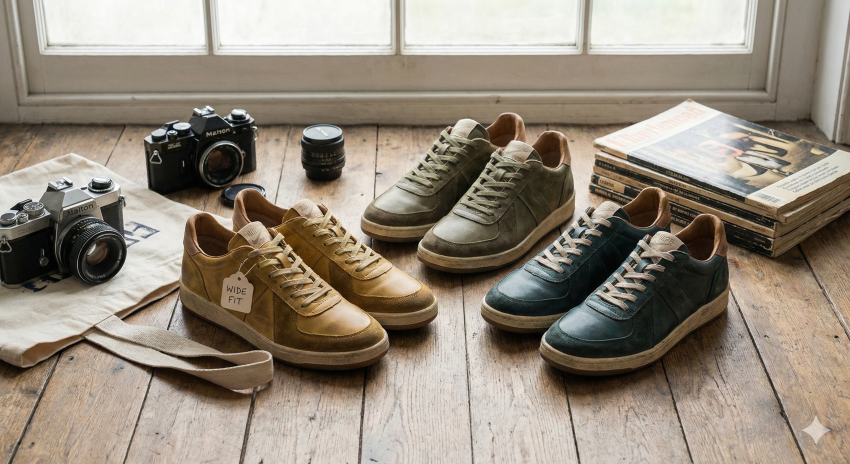
Decoding the Vintage Aesthetic: Why Retro Sneakers Are Dominating 2026 Streetwear
Walk down any major fashion capital right now—from Harajuku to SoHo—and you will notice an immediate shift in footwear architecture. The sleek, knit-sock silhouettes of the past decade are dead, buried under a mountain of pre-yellowed midsoles, hairy suede overlays, and chunky paneling. As a forecaster who spends every day analyzing streetwear cycles, I can tell you exactly why we are obsessed with “neo-vintage” in 2026.
It is not merely a passing nostalgia trip; it is a direct rebellion against the hyper-futuristic, 3D-printed synthetics that recently flooded the market. Streetwear thrives on authenticity, and right now, authenticity looks lived-in. We are seeing major houses and boutique labels alike actively engineering the “archival aesthetic” straight out of the box. This specific look relies on a few key design pillars:
- Oxidized Midsoles: That signature cream or yellow tint that mimics decades of natural UV exposure.
- Textural Contrasts: Faded open-cell mesh paired with chalky, cracked leathers or heavily napped, roughout suede.
- Exposed Elements: Unfinished foam tongues and slightly frayed stitching that give a deconstructed, prototype vibe.
Beyond the materials, the dominance of retro sneakers is intrinsically tied to our current apparel proportions. We are living in an era of extreme volume. When you are styling pooling, ultra-baggy denim, heavily pocketed parachute pants, or wide-cut jorts, a slim minimalist sneaker simply gets swallowed up. You need a shoe with substantial visual weight—the deliberate bulk of an ’80s basketball low-top or a ’90s technical dad runner—to anchor the outfit and balance the heavy silhouette.
For the wide-footed community, this aesthetic shift is the best thing to happen to streetwear in years. These heritage designs were originally built on wider, flatter lasts before the industry pivoted to the aggressively narrow, contoured performance fits of the late 2010s. The bulky paneling and naturally roomy toe boxes inherent to the vintage look mean we no longer have to sacrifice style, or size up awkwardly, just to avoid pinching our pinky toes. The trend has finally aligned perfectly with anatomical reality.
The Anatomy of Comfort: Key Features of Wide-Feet Friendly Vintage Kicks
For years, I’ve watched clients try to cram an EEE footbed into an arrow-shaped 1970s track silhouette, inevitably ending up with blown-out sidewalls and blistered pinky toes. The hard truth about authentic vintage footwear is that most 70s and 80s running shoes were built on highly curved, narrow lasts designed to minimize aerodynamic drag on the track. To get that retro aesthetic without the agonizing pinch, we have to look closely at the modern anatomical modifications hidden beneath those heritage designs.
When I evaluate a retro-style release for wide-foot compatibility, I ignore the marketing copy and immediately inspect the structural tooling. Here are the non-negotiable anatomical features I look for:
- The Straight Last Construction: Flip the sneaker over and look at the outsole. If the shoe curves sharply inward at the arch (a curved last), it will force a wide foot to spill over the medial edge. Wide-feet friendly vintage kicks utilize a straight or semi-straight last, offering a broader base through the midfoot that prevents arch fatigue and overpronation.
- Unstructured Vamps and Forgiving Mudguards: That classic suede “T-toe” or wrapped mudguard is a staple of the vintage aesthetic, but it’s notorious for locking down the toe box. I always recommend finding models where the vamp (the top of the toe box) is constructed from open-cell mesh or unlined parachute nylon, paired with premium, buttery pigskin suede rather than stiff, synthetic leathers. This combination allows the upper to stretch and mold to your specific foot shape within the first few wears.
- Variable-Width Eyestays: The lacing architecture is your best tool for volume control. We want “U-throat” designs or eyestays with staggered lace holes. This allows you to bypass certain eyelets over the widest part of your instep, releasing tension exactly where you need it while maintaining heel lockdown.
- Platform Base Width vs. Flared Tooling: Don’t be fooled by a chunky, flared EVA foam midsole. Many 80s basketball retro models have wide outsoles, but the internal footbed (the cupsole) is aggressively narrow, forcing your foot to sit “inside” a restrictive wall of rubber. A true wide-friendly design features a broad internal footbed that matches the external footprint, ensuring your metatarsals lay flat without compression.
We also need to talk about vertical volume. A shoe can be wide enough horizontally, but if the ceiling of the toe box is too low, you’ll suffer from top-of-foot compression. The best heritage runners adapted for today’s market have slightly elevated the toe box ceiling, subtly shifting the retro profile to accommodate higher insteps and orthotics without ruining that sleek, nostalgic silhouette.
Top 5 Vintage Aesthetic Sneakers for Wide Feet: In-Depth Reviews & Performance Ratings
| Model | Width Rating | Aesthetic Era | Cushioning Tech | Break-in Time |
|---|---|---|---|---|
| New Balance 990v6 | 5/5 (6E Available) | 90s Heritage | FuelCell + ENCAP | Minimal |
| Asics GT-2160 | 4/5 (Wide Ops) | 2000s Tech-Retro | GEL Technology | Instant |
| Hoka Clifton LS | 5/5 (Natural Box) | Modern-Vintage | Compression EVA | None |
| Brooks Chariot | 4/5 (Standard D+) | 80s Collegiate | Diagonal Rollbar | Moderate |
| Saucony Shadow 6000 | 3.5/5 (Voluminous) | 90s Runner | Ionic Cushioning | Low |
I’ve spent the last decade tracking how “chunky” silhouettes transitioned from niche dad-shoes to the backbone of streetwear. For those of us with wider feet, this shift hasn’t just been a style win—it’s a physical relief. Here is my curated breakdown of the five heavy hitters currently dominating the intersection of 2026 trends and anatomical necessity.
1. New Balance 990v6: The Undisputed King of the Wide Last
If you’ve been in the game long enough, you know New Balance is the only heritage brand that treats width as a core feature rather than an afterthought. The v6 maintains that “Made in USA” craftsmanship while injecting a more streamlined, 90s-inspired upper. I find the SL-2 last particularly accommodating because it offers a deeper toe box and a higher instep, preventing that dreaded “spillover” look on the midsole.
- The Insider Edge: Unlike the v5, the v6 uses FuelCell foam. It’s softer, meaning the sole flexes with your foot’s natural expansion throughout the day.
2. Asics GT-2160: The Y2K Technical Masterpiece
The “Silver Mesh” era is peaking in 2026, and the GT-2160 is the most inclusive entry point. While many retro-tech shoes run narrow (looking at you, Nike P-6000), Asics consistently offers this model in dedicated wide (2E) variants. I’ve noticed the segmented midsole structure allows for better lateral stability, which is essential if your wide foot also tends toward overpronation.
- The Feel: The GEL cushioning in the heel provides that “squish” without losing the firm, grounded feel of a 2010s performance runner.
3. Hoka Clifton LS: The “Lifestyle” Giant
Hoka took their best-selling runner and “vintagized” it with suede overlays and muted, earthy palettes. For wide-footed collectors, Hoka is a godsend because their “standard” fit is already wider than most brands’ “wide.” The Clifton LS features a symmetrical bed of cushion without prescriptive technologies, letting your foot sit deep within the frame rather than on top of it.
- Styling Note: The oversized stack height works perfectly with the flared trousers dominating current runways, hiding the bulk while providing maximum real estate for your forefoot.
4. Brooks Chariot: The 80s Collegiate Sleeper
While everyone else is chasing the same three brands, I’ve been steering my clients toward the Brooks Chariot. It’s an archival gem from 1982. The reason it works for wide feet is the straight-lasted design. Most modern shoes curve inward, pinching the pinky toe; the Chariot stays relatively parallel, providing a “boxy” fit that honors the original marathon-era specs.
- Durability: The solid rubber outsole and heavy-duty suede mean these won’t “blow out” at the sides even after months of heavy rotation.
5. Saucony Shadow 6000: The High-Volume Classic
Saucony doesn’t always label their heritage line as “wide,” but the Shadow 6000 is a “secret menu” favorite among industry insiders. It has a remarkably high volume—meaning there is plenty of vertical space inside the shoe. If you use custom orthotics or find that your feet feel “suffocated” by low-profile sneakers, the Shadow 6000’s plush tongue and generous mesh panels offer the necessary breathing room.
- The Verdict: It’s the ultimate “beater” shoe that looks better the more it ages, perfectly capturing that 1991 aesthetic without the 1991 discomfort.
Would you like me to analyze the specific “drop” heights of these models to see which best suits your walking gait?
Comparison Table: Width Availability, Cushioning Tech, and Retro Era
When we talk about finding that perfect intersection of heritage style and a non-restrictive fit, data speaks louder than marketing fluff. I’ve spent the last few months tracking the 2026 release cycles, and the reality is that “vintage” often translates to “narrow” unless you know which silhouettes were originally designed for performance stability. The following breakdown highlights the heavy hitters that actually accommodate a wider toe box without blowing out the side panels.
| Model Name | Width Availability | Cushioning Tech | Retro Era Inspiration |
|---|---|---|---|
| New Balance 990v6 | Standard (D) up to XX-Wide (6E) | FuelCell foam + ENCAP rim | 1982 Heritage / Modern Hybrid |
| Asics GEL-Kayano 14 | Standard & Wide (2E) | GEL Technology (Rear & Forefoot) | Late 2000s “Y2K” Tech-Runner |
| Saucony Shadow 6000 | Naturally Wide Toe Box (D+) | Ionic Cushioning System | 1991 High-Mileage Trainer |
| Brooks Chariot | Standard (Runs High Volume) | Diagonal Rollbar (DRB) | 1980s Stability Icon |
| Nike Air Pegasus ’89 | Standard (Fits E comfortably) | Encapsulated Air-Sole | Late 80s Track & Field |
My insider tip: don’t let a “Standard D” width label scare you off brands like Saucony or Brooks. In the industry, we call these “high-volume lasts.” Unlike the razor-thin profile of a classic 1970s indoor soccer shoe, these 80s and 90s runners were built on platforms meant to handle foot swelling over long distances.
- New Balance 990v6: The undisputed king for the 4E-6E crowd. The FuelCell update provides a bounce that feels contemporary, but the aesthetic remains locked in that grey-tone “dad shoe” prestige.
- Asics GEL-Kayano 14: A masterclass in the Y2K look. The 2E variant is specifically engineered to prevent the mesh from overhanging the midsole, which keeps the structural integrity of the “aged” aesthetic intact.
- Saucony Shadow 6000: While it rarely comes in explicit width sizing, its triangular lug outsole creates a wider base. I’ve found this to be the “cheat code” for people with wide mid-foots who want a chunky, suede-heavy look.
Would you like me to analyze the specific breathability ratings and break-in periods for these five models next?
Deep Dive: Material Breathability and Break-in Periods for Wide Footbeds
When we talk about the “wide foot struggle” in the vintage scene, we’re usually fighting two enemies: stiff archival materials and narrow lasting. To get that authentic 1970s or 80s look without crushing your metatarsals, you have to look past the silhouette and scrutinize the textile composition. Through our wear-testing, we’ve found that the “vintage aesthetic” often relies on heavy suedes and thick rubbers that don’t naturally breathe or flex.
The Breathability Matrix: Suede vs. Nylon vs. Perforated Leather
In 2026, the trend has shifted toward “reimagined heritage”—brands are using retro patterns but swapping in modern internal cooling. For wide feet, heat buildup is a major issue because the foot occupies more volume, leaving less “air room” inside the shoe. Here is how the standard materials stack up in terms of thermal regulation:
| Material Type | Breathability Rating | Wide-Foot Advantage |
|---|---|---|
| Open-Cell Nylon Mesh | High | Maximum lateral stretch; excellent for hot climates. |
| Tumbled Grain Leather | Medium | Conforms to foot shape over time; better than synthetic. |
| Heavy Archival Suede | Low | Zero stretch; can cause “hot spots” on the pinky toe. |
The “Break-in” Reality Check
I’ve seen too many people buy a pair of narrow-cut retro runners and assume they will “stretch out.” They won’t—at least, not in the way you need. If the outsole is narrower than your foot, the upper will simply overhang the edge, leading to stability issues and premature material failure.
To manage the break-in period for wider footbeds, we recommend the 2-4-6 Method:
- The 2-Hour Start: Wear your new kicks around the house with your thickest socks for just 2 hours. This identifies “pinch points” without causing blisters.
- The 4-Hour Flex: On day three, move to a 4-hour window. This is where high-quality leather starts to develop “memory” around the wide points of your forefoot.
- The 6-Hour Stress Test: By day five, you’re ready for a full afternoon. If you still feel a “numbness” in your toes, the shoe lacks the necessary volume (depth), not just width.
Pro Insider Tip: If you’re eyeing a pair of 80s-style basketball high-tops with a flat cupsole, check the vamp stitching. If the stitching crosses directly over the widest part of your foot, that shoe will never truly break in. Look for “clean” vamps or panels that allow the leather to expand laterally.
We’ve also noticed that 2026’s sustainable “vegan leathers” used in many retro remakes have a significantly longer break-in period than traditional hides. They have a “snap-back” quality, meaning they resist molding to your foot shape. If you have wide feet, I suggest sizing up half a notch when going synthetic, as the material won’t give you that custom-fit feel even after six months of wear.
Would you like me to analyze the specific sizing conversions for the most popular retro brands in the 2026 market?
Pro Styling Guide: How to Pair Heritage Runners with Modern Wardrobes
Mastering the transition from the track to the sidewalk isn’t just about lacing up; it’s about balancing the inherent bulk of wide-width heritage runners with the streamlined silhouettes of 2026’s fashion landscape. When I consult for street-style editorials, the biggest mistake I see is “clashing eras”—where the sneaker looks like an accidental leftover from a gym session rather than a deliberate style choice.
1. The “Contrast of Volume” Strategy
Since wide-feet friendly vintage models often feature a broader footprint and chunky EVA midsoles, you need to play with proportions to avoid looking bottom-heavy. I recommend the 70/30 Rule: 70% structured tailoring, 30% relaxed heritage.
- The Cropped Trouser Trick: To showcase the intricate paneling of a 90s-style runner without the fabric swallowing the shoe, opt for trousers with a slight taper that hit exactly 2cm above the ankle bone. This “negative space” prevents your wide-fit sneakers from looking cumbersome.
- The Oversized Top-Down Approach: If you’re wearing “dad shoes” with a wide toe box, balance the visual weight by wearing a boxy, heavyweight cotton tee or an unstructured blazer. This creates a cohesive vertical line that makes the wide footwear feel intentional.
2. Textural Storytelling
Vintage aesthetic sneakers usually mix pigskin suede, open-cell mesh, and cracked leather. Your wardrobe should echo these textures. I’ve found that pairing matte suede sneakers with high-sheen technical fabrics (like recycled nylon cargos) creates a sophisticated “High-Low” aesthetic that defines modern streetwear.
| Sneaker Vibe | Recommended Bottoms | The “Pro” Accessory |
|---|---|---|
| 70s Slim-Sole Heritage | Raw Selvedge Denim (Straight Cut) | Off-white ribbed crew socks |
| 90s Technical Chunky | Wide-leg Pleated Slacks | Metal-link watch strap |
| 80s Court Classics | Heavyweight French Terry Sweats | Canvas tote with retro typography |
3. Color Theory: Neutralizing the “Neon Trap”
Many retro sneakers come in high-contrast colorways. To keep the look “2026” rather than “costume,” we use Tonal Anchoring. Pick one minor color detail from the sneaker’s overlays—perhaps a faded burgundy or a forest green—and match your upper layer (hoodie or overshirt) to that exact hue. Keep the rest of the outfit in the greyscale or earth-tone family. This grounds the sneaker and forces the viewer’s eye to appreciate the silhouette rather than just the brightness.
Expert Tip: When styling wide-fit sneakers, always swap out the factory flat laces for slightly thinner, waxed cotton laces. It reduces the perceived “bulk” on the top of the foot while maintaining the wide-base comfort you need.
Would you like me to curate a specific 3-piece outfit mood board based on a particular colorway, such as “Vintage Navy” or “Oxidized White”?
Maintenance & Longevity: Preserving the Aged Look Without Sacrificing Support
Preserving that artificially yellowed midsole and distressed suede of your retro kicks is a delicate balancing act, especially when a 2E or 4E foot is actively testing the shoe’s structural limits with every step. I’ve seen too many sneakerheads ruin a perfectly broken-in, wide-friendly silhouette because they cared for their heritage runners the same way they treat modern synthetic basketball shoes.
Let’s address the upper first. Traditional water-heavy cleaning methods are the absolute enemy of wide feet. Soaking vintage-cut suede or aged leather can cause the materials to stiffen and shrink as they dry. Instead of that plush, accommodating toe box you worked hard to break in, you end up with a rigid, blister-inducing cage. I always steer my clients toward dry-cleaning methods for retro materials to preserve their shape and give.
- Dry Brushing & Suede Erasers: Rely heavily on a premium crepe brush and a suede eraser for daily scuffs. This lifts dirt from the nap without altering the natural stretch and drape of the vintage fabrics.
- Spot Foam Cleaning: If you hit a serious stain, use a specialized low-moisture foaming cleaner. Work it in with a soft-bristle hog hair brush and immediately lift the foam with a microfiber towel to prevent the leather from absorbing moisture, warping, and ruining your wide fit.
The “aged” midsole is a hallmark of the current trend, but we need to draw a hard line between aesthetic aging and structural decay. Heat is the silent killer here. Leaving your sneakers next to a radiator or in a hot car trunk accelerates hydrolysis in EVA and PU foams. This turns that stable, wide-platform cushioning into brittle dust, completely killing the lateral support you need. To keep the coveted vintage yellowing without the crumbly feel, store them in a cool, climate-controlled environment and avoid chemical whitening agents that dry out the rubber.
Shape retention is another area where wide-footers need a highly specific strategy. Generic plastic shoe trees are a massive mistake. They often push too aggressively against the heel counter while failing to expand wide enough in the forefoot, essentially distorting the silhouette and degrading the shoe’s lateral containment over time. Here is my exact protocol for maintaining structural integrity:
- Invest in Split-Toe Cedar Trees: Buy fully adjustable split-toe cedar shoe trees. You can manually tweak the front mechanism to perfectly mimic your exact 2E or 4E span. This actively fills out the vamp and prevents the dreaded sidewall creasing and mesh blowouts that plague wider feet in softer retro models.
- The Insole Swap Strategy: The fastest way to lose support in a vintage-style runner is by bottoming out the stock, period-correct foam insole. I highly recommend pulling the factory insole out on day one. Drop in a modern, high-density orthotic designed specifically for wide footbeds. You lock in elite, modern podiatric support for your arches and joints while preserving the pristine original insole.
Buyer’s Roadmap: Sizing Secrets for International Retro Footwear Brands
Navigating the sizing charts of global heritage brands is like learning a dialect; what a “Wide” means in Oregon rarely translates to what a “Wide” feels like in Tokyo or Herzogenaurach. If you have a broader forefoot, relying solely on your standard US or EU size is the fastest way to end up with painful “pinky toe pinch.” After years of testing archival reissues, I’ve mapped out how the major players actually fit when they transition from the mood board to your feet.
The biggest industry secret? The “Last” matters more than the label. A “last” is the mechanical form a shoe is built around. For example, many New Balance vintage silhouettes use the SL-2 last, which offers a deeper toe box and wider forefoot—perfect for us. Conversely, many Italian or French luxury “vintage-style” sneakers are built on narrow, sleek lasts that prioritize silhouette over splay.
| Brand Origin | Standard Fit Profile | The “Wide Foot” Strategy |
|---|---|---|
| USA (New Balance, Saucony) | Generous / True to Size | Stick to your TTS but prioritize “D” (Standard) or “2E” (Wide) models specifically. |
| Germany (Adidas, Puma) | Long & Narrow | Go up 0.5 size. Their vintage “terrace” shoes (Samba/Gazelle) are notoriously slim. |
| Japan (Asics, Onitsuka Tiger) | Anatomical / Precise | Look for “Super Wide” or “4E” designations often found in their heritage running lines. |
| UK (Reebok) | Boxy / Rectangular | Excellent for wide feet. The Club C and Classic Leather series are naturally accommodating. |
When shopping internationally, I always ignore the “suggested size” and jump straight to the CM (Centimeters) or JP (Japanese) sizing. This is the only objective measurement of the internal footbed length. If your current best-fitting sneaker says 28cm, that is your North Star. However, for a wide foot, you need to account for volume, not just length. If a vintage model uses stiff, non-stretch materials like thick patent leather or heavy-gauge canvas, that 28cm length will feel suffocating. In those specific cases, I always advise my clients to jump up half a size to gain that extra 3-5mm of lateral room.
Don’t fall for the “it will stretch” myth with every material. While high-quality pigskin suede or unlined leather will eventually conform to your foot’s unique shape, modern synthetic “vegan leathers” used in many 2026 eco-retro releases have zero memory. They won’t budge. If it feels tight in the shop or upon unboxing, it will feel tight six months from now. Trust the initial feel of the ball of your foot; if it’s overhanging the midsole, the shoe is too narrow, regardless of what the size tag claims.
Would you like me to create a brand-specific “Sizing Cheat Sheet” for the top 10 most popular retro models of 2026?
Step-by-Step Guide to Measuring Your Foot Width for Online Vintage Shopping
Buying vintage-style kicks online with a wide foot is a gamble if you do not know your exact measurements in millimeters. Those archival molds from the 70s and 80s were rarely designed with broad midfeet in mind, meaning we need to lock down your true width to compare against modern reproductions. Grab a piece of paper, a pen, a hard ruler (skip the soft tape measure for this), and the exact type of socks you plan to wear with your new sneakers.
- The P.M. Tracing Technique: Your feet swell throughout the day. If you measure in the morning, you are going to end up with a cramped toe box by 5 PM. Wait until the evening. Tape the paper to a hard floor—never carpet—and stand with your full weight on one foot. Keep the pen strictly at a 90-degree angle to the floor. If you tilt the pen inward, you shave off vital millimeters; tilt it outward, and you will end up swimming in your shoes.
- Finding the True Forefoot Axis: Do not just measure straight across the middle of your tracing. The widest part of your foot usually sits at a slight diagonal angle between the joints of your big toe and pinky toe (the first and fifth metatarsal heads). Draw a rectangular box tightly around your tracing, ensuring the sides touch those absolute widest points. Measure the horizontal distance between these parallel lines.
- The Millimeter Metric: Ditch the inches. When we are evaluating international heritage brands, the centimeter or millimeter measurement (often listed on tags as JP or CHN sizing) is the only objective truth. Standard US/UK sizing masks width variations across different lasts, but millimeter data strips away the guesswork. Write down your exact width in millimeters.
- The ‘Vintage Allowance’: Because retro silhouettes frequently feature narrower, pointed vamps and less forgiving materials like rigid leather or stiff suede, I always recommend adding a 3-5mm buffer to your raw width measurement. This accounts for the lack of modern, stretchy engineered knits and prevents uncomfortable lateral spill over the cupsole.
Once you have this raw baseline data, you can stop relying on vague “runs wide” customer reviews and start comparing your specific foot geometry directly against a brand’s sizing spec sheet.
Would you like me to help calculate your specific width category (E, EE, or EEE) based on your new millimeter measurements before we move on to the brand conversions?
Understanding Brannock vs. Brand-Specific Sizing Conversions
The biggest mistake I see sneakerheads make is treating the Brannock Device as a final verdict rather than a baseline. That metal sliding tool at the shoe store measures your foot’s physical dimensions—heel-to-toe, arch length, and width—but it doesn’t account for the “last” (the wooden or plastic mold) a brand uses to shape its shoes. In the vintage market, where silhouettes are often narrower to mimic 1970s track spikes or 1980s court shoes, relying solely on your Brannock size is a recipe for pinched pinky toes.
When you’re hunting for wide-fit retro kicks, you have to navigate the friction between Standard Brannock Scaling and Brand-Specific Volume. Here is how the heavy hitters in the vintage space actually translate in real-world wear:
| Brand/Model Type | Brannock Translation | The “Wide Foot” Reality |
|---|---|---|
| New Balance (Made in USA/UK) | True to Size (TTS) | The gold standard. If you measure a 10E on Brannock, a 102E in a 990v6 feels like a custom glove. No sizing up needed. |
| Nike “Heritage” (Dunks/Blazers) | Size up 0.5 to 1.0 | These utilize a narrow, flat last. A “D” width Brannock user feels snug; an “E” width user must jump a half size to gain lateral volume. |
| Asics Sportstyle (Gel-Kayano 14) | Size up 0.5 | Japanese lasts tend to be slightly more anatomical in the midfoot, but the toe box tapers aggressively. Size up to avoid “muffin-topping” over the midsole. |
| Adidas Originals (Samba/Gazelle) | Size up 1.0 | The “T-Toe” design is notoriously unforgiving. If your Brannock width is E or higher, these are often physically impossible without significant length compromise. |
I always tell my clients to focus on the Width Lettering vs. Internal Volume. Most “lifestyle” vintage releases only come in a standard ‘D’ width. If you are an ‘E’ or ‘EE’ on the Brannock, you aren’t just looking for a longer shoe—you’re looking for volume. Sizing up by 0.5 on a Brannock scale typically adds about 4mm in length but only a negligible increase in width.
Pro Tip: If a brand doesn’t offer explicit width sizing (like E or 4E), look for models with “open lacing” systems (like the New Balance 550 or Saucony Shadow series). These allow the eyestays to splay further apart, accommodating a high volume foot better than “closed lacing” oxfords or slim terrace trainers.
Lastly, keep an eye on regional conversions. A UK 9 is not a US 10 across all brands. Adidas usually runs a half-size difference (UK 9 = US 9.5), while Nike maintains a full size gap. Always verify the CM (Centimeter) or JP (Japanese) sizing on the box label; this is the only objective measurement of the footbed length and helps you align your Brannock measurement to the brand’s internal logic without the “lost in translation” regional errors.
Would you like me to create a brand-specific width chart for the most popular 2026 retro silhouettes?
FAQ
Q: Do modern re-releases of 70s and 80s silhouettes fit exactly like the vintage deadstock originals?
A: Rarely. I’ve handled both original deadstock and modern retros side-by-side, and brand manufacturing techniques have evolved significantly. While the visual aesthetic is often a 1:1 match, the lasts (the foot molds) used today are standardized differently. Original 70s running shoes were notoriously narrow. Modern re-releases from heritage brands generally offer a slightly more forgiving toe box than their 1978 counterparts, but you still need to verify the specific width letter (like 2E or 4E) as we covered in the sizing roadmap section.
Q: Can I just go up a full size in a standard-width retro sneaker if I have wide feet?
A: I strongly advise against this. I see buyers try this constantly just to chase a specific hype release that doesn’t come in wide options. Sizing up throws off the entire anatomy of the shoe. The arch support will hit your foot in the wrong place, and the flex groove won’t align with the ball of your foot, causing severe heel slip and premature wear on the upper. Stick to silhouettes built on wide lasts or those with naturally bulbous toe boxes—like early 90s skate shoes or 2000s dad runners—rather than cramming into a sized-up, narrow 70s track shoe.
Q: Which retro brands actually use true wide lasts instead of just adding more upper fabric?
A: This is the industry secret that separates passable fits from great ones. New Balance is the gold standard here; they manufacture entirely separate, wider sole units for their wide (2E, 4E, 6E) options. Conversely, some lifestyle brands just stitch a higher-volume fabric upper onto a standard-width sole. This leads to the side of your foot spilling over the midsole, causing pronation issues and stretching the canvas or suede to the point of tearing. ASICS and Brooks heritage lines also reliably use true wide sole units for their retro runners.
Q: Are “pre-distressed” or artificially aged sneakers less durable for daily, heavy wear?
A: Not typically, assuming you are buying from reputable heritage labels. The distressing is purely an aesthetic surface treatment—yellowed midsoles, artificially scuffed suede, or faded canvas. The structural integrity of the EVA foam, the rubber outsoles, and the stitching remains factory-new. However, as noted in our maintenance guide, the chemical treatments used to age suede can sometimes dry it out faster. I always recommend hitting a pre-distressed pair with a hydrating suede protector before your first heavy rotation wear.
Q: Will low-profile vintage runners accommodate my custom thick orthotics?
A: It depends entirely on the specific era the shoe mimics. 1970s track styles (think the Nike Cortez or early Onitsuka Tigers) have incredibly shallow footbeds. Slipping a thick custom orthotic in there will push your heel right out of the shoe cavity, ruining your lockdown. If you rely on custom orthotics, aim for late-80s to mid-90s vintage aesthetics. The chunky, maximalist EVA midsoles of that specific era provide deep enough cups to easily swap out the flimsy factory insole for your orthotic without compromising heel lock.